FREE Shipping in Singapore (All Items) | $10 to Malaysia & Brunei | $15 to everywhere else | $60 vis FEDEX or $30 Vis SingPost to USA
* Overseas rate applies to small items only - large items may cost more.
FREE Shipping in Singapore (All Items) | $10 to Malaysia & Brunei | $15 to everywhere else | $60 vis FEDEX or $30 Vis SingPost to USA
* Overseas rate applies to small items only - large items may cost more.
A finished takrut can look deceptively simple: a rolled metal sheet, a casing, perhaps some sacred materials sealed inside. But for Phu Lersi Techo’s custom takruts, much of what matters happens long before the finished piece reaches its owner.
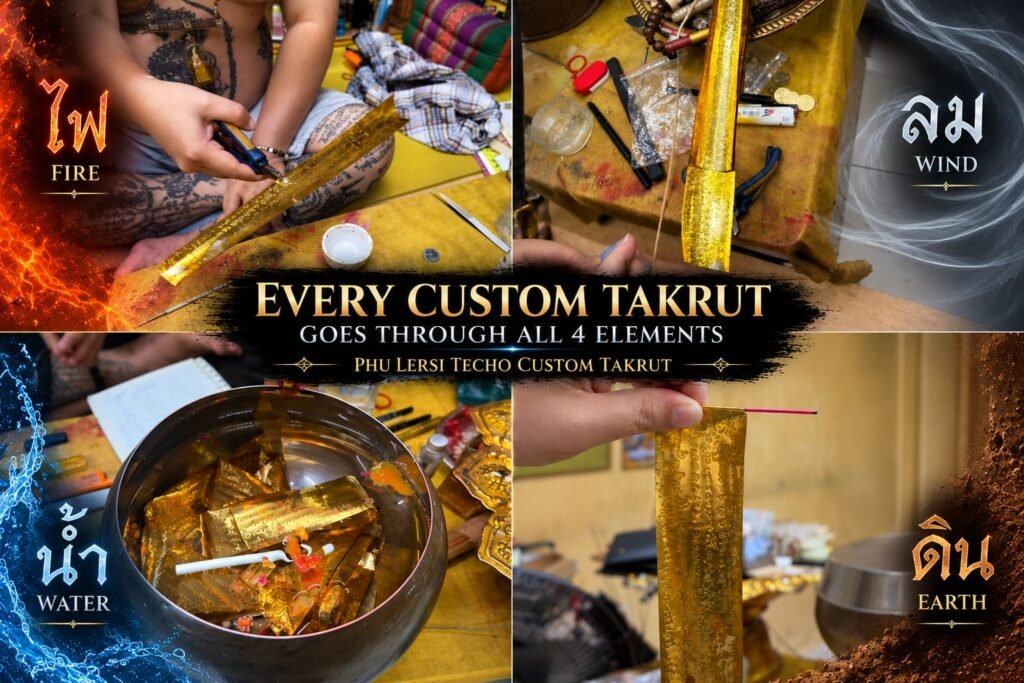
The writing of the yants is only the beginning. After that comes a consecration process that stretches across weeks, involving repeated chanting, different ritual stages, the Four Elements, and finally the selection and insertion of materials for the individual piece. The photographs shared here show some of the key moments, but they do not show every day, every repetition, or every chanting session in between.
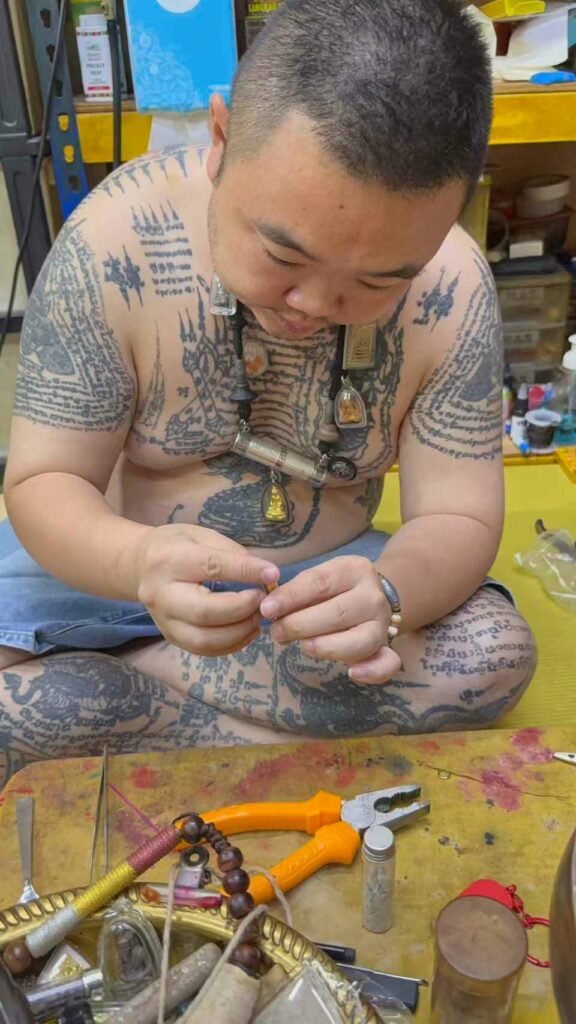
The Takrut Begins With the Owner
Phu Lersi Techo does not prepare every custom takrut with exactly the same writing, materials or direction. The process first begins with understanding what the owner wants or needs.
Some already know the effects they want and the main area they wish to focus on. Others may simply explain their present situation and leave the rest to Phu Lersi Techo. From there, he determines the yants, wicca and direction that will form the basis of the piece.
Owners can also choose between Prai and Non-Prai preparation. For those who have already ordered, Phu Lersi Techo writes the yants individually onto the copper sheet, after which we can provide the owner privately with a summary of the writing and its intended direction before the takrut moves into the longer stages of consecration.
Writing the Yants Is Only the Beginning
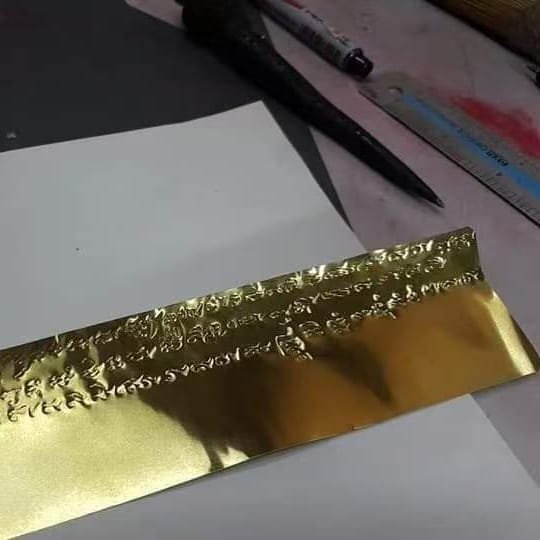
Once Phu Lersi Techo completes the yants, he does not simply roll, fill and finish the takrut. This is where the longer process begins.
The written sheets go through repeated periods of chanting and consecration, with individual stages continuing for several days before the takrut moves to the next part. From the initial writing to the later stages of preparation, the full process takes weeks.
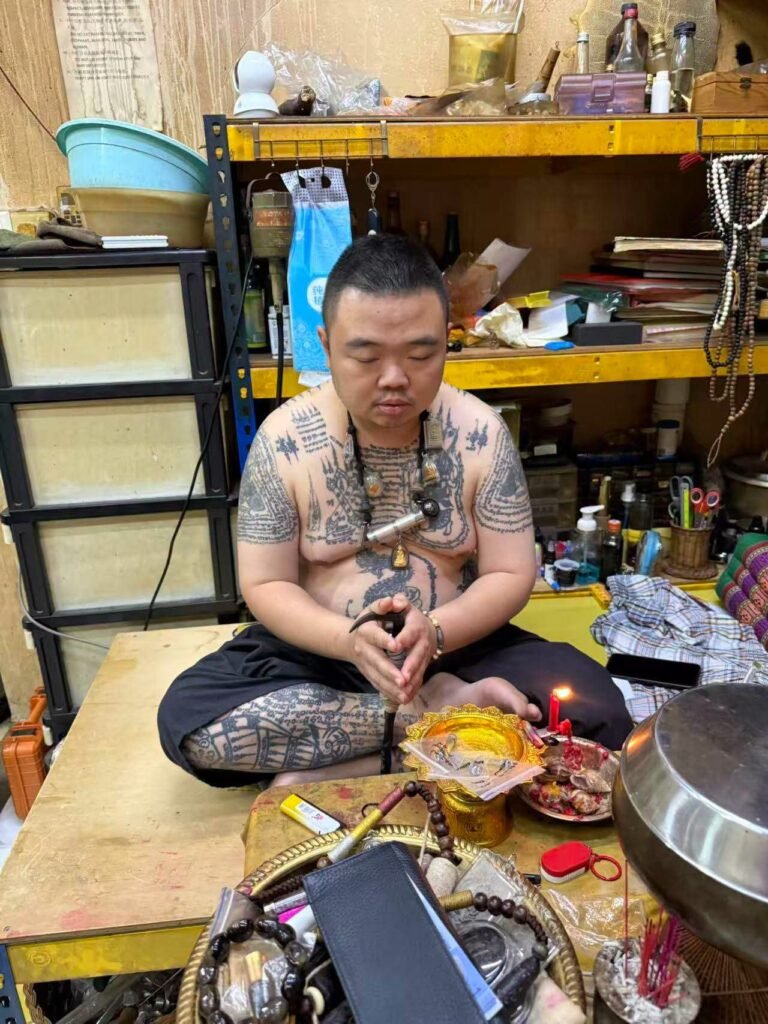
This is easy to miss when looking at photographs. A photograph captures one moment, but it does not show the chanting that happened before it, the chanting that continues afterwards, or the repetition across the following days.
Earth, Water, Wind and Fire
One of the more interesting parts of Phu Lersi Techo’s preparation is the incorporation of the Four Elements — Earth, Water, Wind and Fire. Within traditional Thai elemental understanding, the Four Elements form the basic qualities of physical existence.
In this particular consecration process, Phu Lersi Techo does not represent them only through words or written symbolism. He physically incorporates each element into the preparation of the takrut.
Earth – The Body of the Takrut
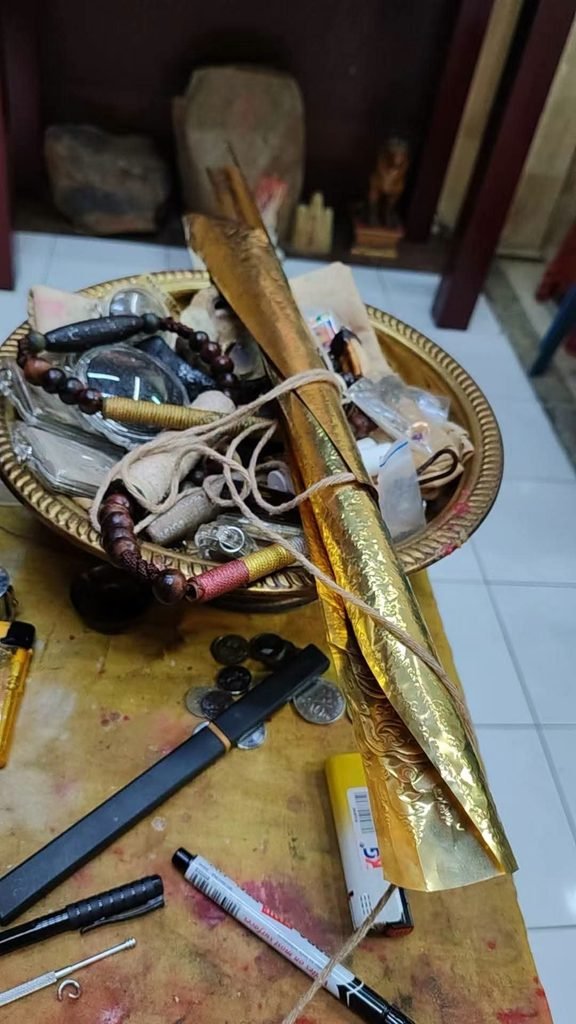
Earth begins with the takrut sheet itself. The metal sheet provides the physical body and foundation upon which Phu Lersi Techo writes the yants.
Earth traditionally represents solidity, structure and form. In this process, that foundation is already present from the moment the takrut begins to take physical shape, and everything that follows takes place upon this base.
Water – Consecrated Holy Water
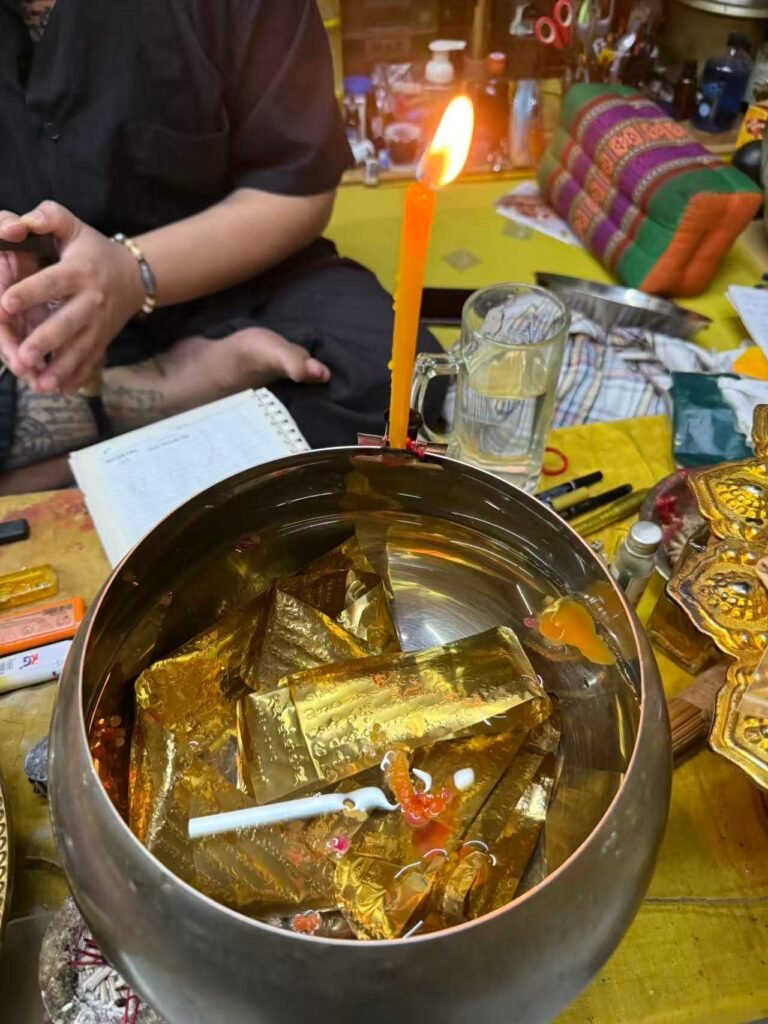
Water enters during another stage of the consecration. Phu Lersi Techo immerses the written takrut sheets in consecrated holy water while chanting continues.
This is not simply a quick dipping of the sheets before they move to the next stage. The takruts remain within this part of the consecration while the ritual continues over time, so the photographs showing the sheets submerged in the bowl capture only one moment within a much longer process.
Wind – Breath and Chanting
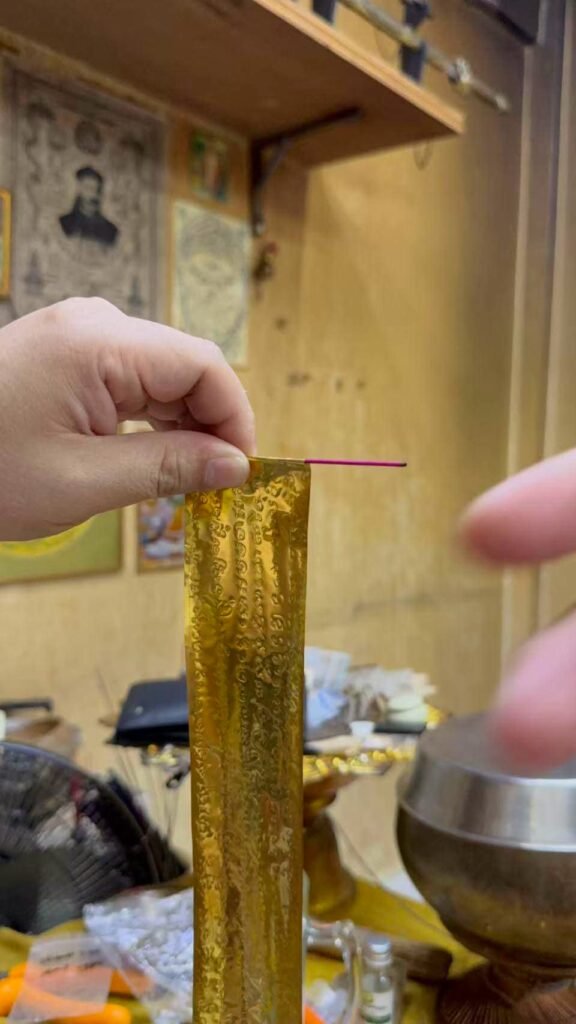
Wind enters through breath. During the chanting, Phu Lersi Techo blows directly onto the takrut.
Visually, this can seem like one of the simplest stages because there is no need for an elaborate setup. The focus remains on the chanting, the breath, and the wicca carried through that part of the consecration.
Fire – Heat and Transformation
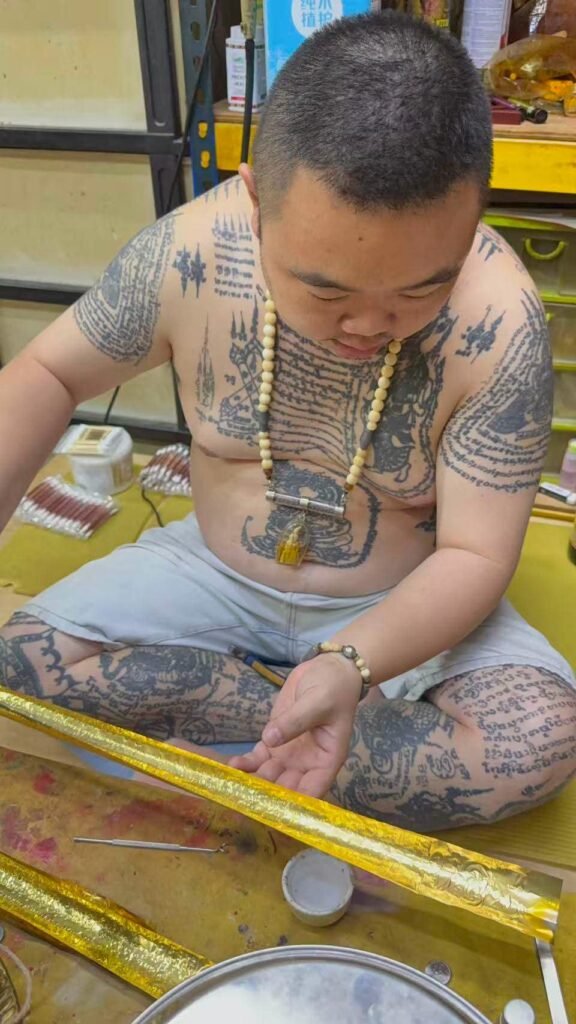
Later comes Fire. During this stage, Phu Lersi Techo carefully heats or “bakes” the takrut over fire while continuing to chant.
The fire itself should not be viewed separately from the rest of the ritual, because simply heating the metal does not make this a consecration. What matters is the combination of the fire stage with the chanting and wicca surrounding it.
Earth provides the physical foundation, while Water immerses it. Wind reaches it through breath, and Fire brings heat and transformation. Together, all four become part of the wider preparation of the takrut.
The Four Elements Are Not Four Quick Steps
Our cover image shows all four elements together because it makes the process easier to understand at a glance. However, this should not give the impression that the four photographs represent four steps completed consecutively within a single afternoon.
They do not. Each stage takes time, and the takruts can remain within one part of the consecration for several days before proceeding further.
Chanting continues repeatedly throughout the overall preparation. After the holy-water stage, Phu Lersi Techo continues chanting over the pieces and places them at the altar and Pan Khru before moving into later stages such as the fire consecration.
The entire process therefore stretches across weeks. We have chosen to document the key moments rather than repeatedly post what may appear, from the outside, to be the same scene each day.
Traditional Wicca Does Not Always Look Dramatic
Some parts of the process can look surprisingly simple, especially to people more accustomed to modern presentations of amulet consecrations. A teacher may sit at an altar and chant repeatedly, while a takrut rests in holy water as the consecration continues.
At another stage, the teacher blows his breath onto the sheet, and the same chanting may continue again the following day. There may be no enormous ceremonial setup and nothing arranged specifically to make the process look impressive in photographs.
But that is not the important part. The key lies in the wicca, the chanting, the repetition and the time put into the consecration.
A complicated-looking ritual does not automatically mean stronger wicca, just as a simple-looking ritual does not mean very little is happening. Much of traditional Thai wicca is not particularly spectacular to watch, and the real work can be repetitive, quiet and slow.
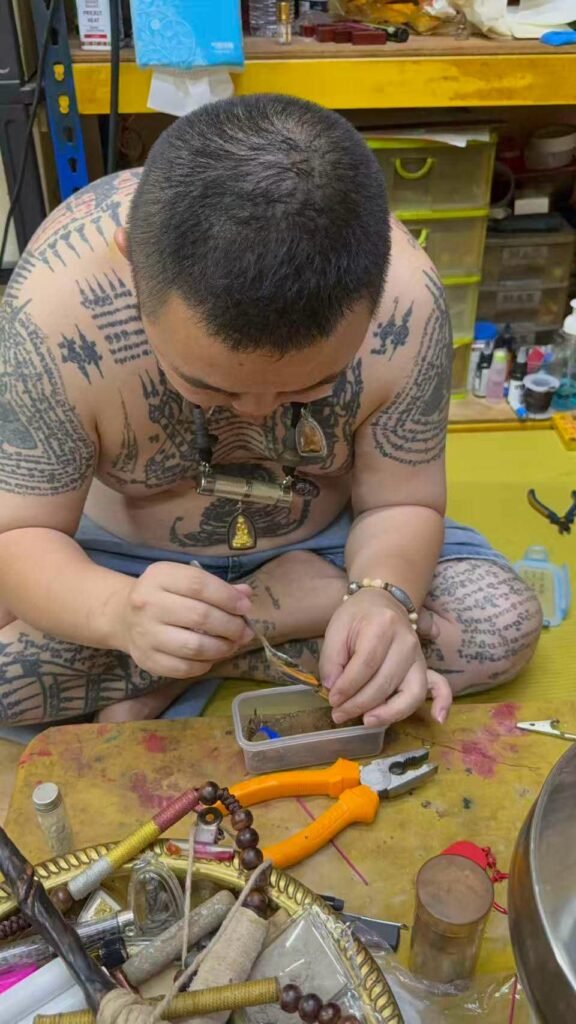
The Materials Come Later
Another part that can easily be misunderstood is the role of sacred materials. Phu Lersi Techo does not simply gather the ingredients first and pack them into the takrut.
For these pieces, the materials come later. After the earlier stages of writing and consecration, he selects the ingredients intended for each individual takrut.
This is where the pieces can begin to differ much more clearly from one another. One owner may require a particular group of materials, while another may require something completely different.
The selection depends on the intended effects, the main focus of the piece, whether it follows a Prai or Non-Prai direction, and the specific wicca Phu Lersi Techo prepares for that owner.
Quantity Is Not the Point
Long ingredient lists naturally attract attention. A takrut containing ten different materials can sound more impressive than one containing three, but quantity alone tells us very little.
For Phu Lersi Techo’s custom takruts, the more important question is why he selected each material. Each ingredient should suit the purpose of the takrut and work together with the wicca he prepares.
Because of this, one piece may contain more materials while another contains fewer. That does not automatically make one better than the other.
Quality and suitability matter more than simply chasing quantity. There is little point filling a takrut with ingredients that have no real reason to be there simply to make its material list longer. Each material should have a purpose.
Why Two Custom Takruts Can Be Completely Different
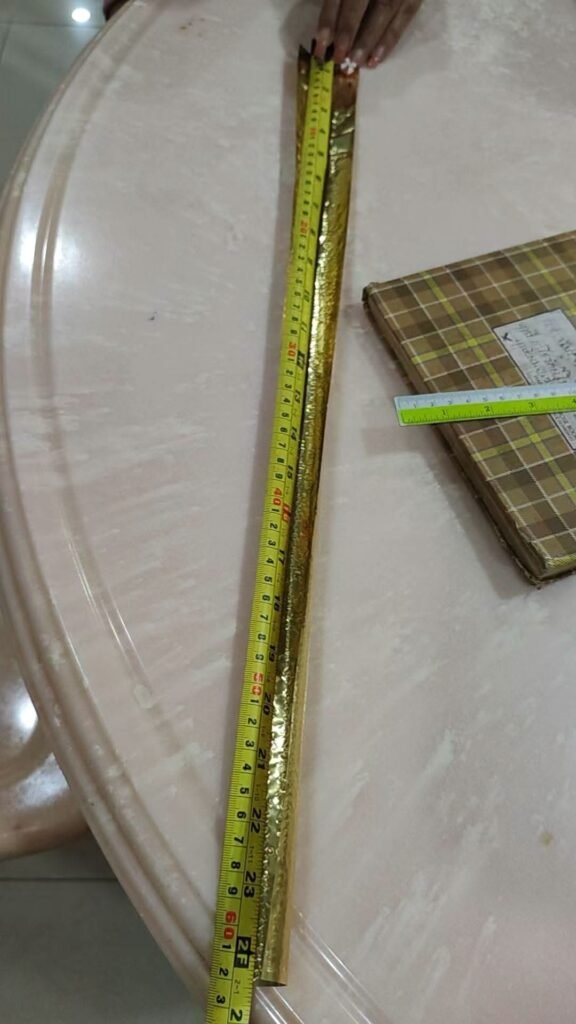
Two takruts prepared during the same period may look almost identical from the outside. Both may begin with copper sheets and pass through the same broad elemental stages, and they may also spend weeks undergoing chanting and consecration.
Yet internally, they can be very different pieces. The yants may differ, as may the materials, focus and wicca.
One owner may want greater emphasis on wealth and opportunities, while another may focus on attraction, influence, protection or something else entirely. Some owners may not choose the effects themselves at all.
Instead, they can explain their situation and allow Phu Lersi Techo to determine the yants, materials and direction he considers suitable. That individual preparation is one of the most important aspects of these custom takruts.
What the Finished Takrut Does Not Show
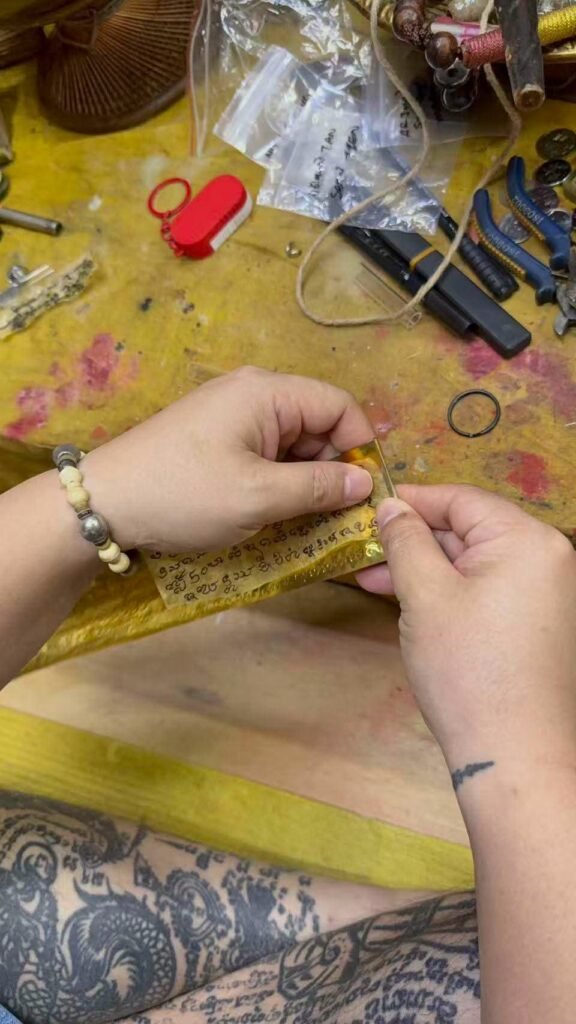
By the time Phu Lersi Techo rolls, fills and cases the takrut, most of this process is no longer visible. You see the finished piece, but not the days it spent soaking in holy water.
The final takrut does not show every chanting session or the repeated work at the altar. Nor does it show the breath blown onto it or every stage leading into the fire consecration.
You may not even know why Phu Lersi Techo chose one particular material instead of another. This is why documenting the process matters, because it gives a clearer picture of what actually happens before the finished takrut appears.
A Small Object With a Long Process Behind It
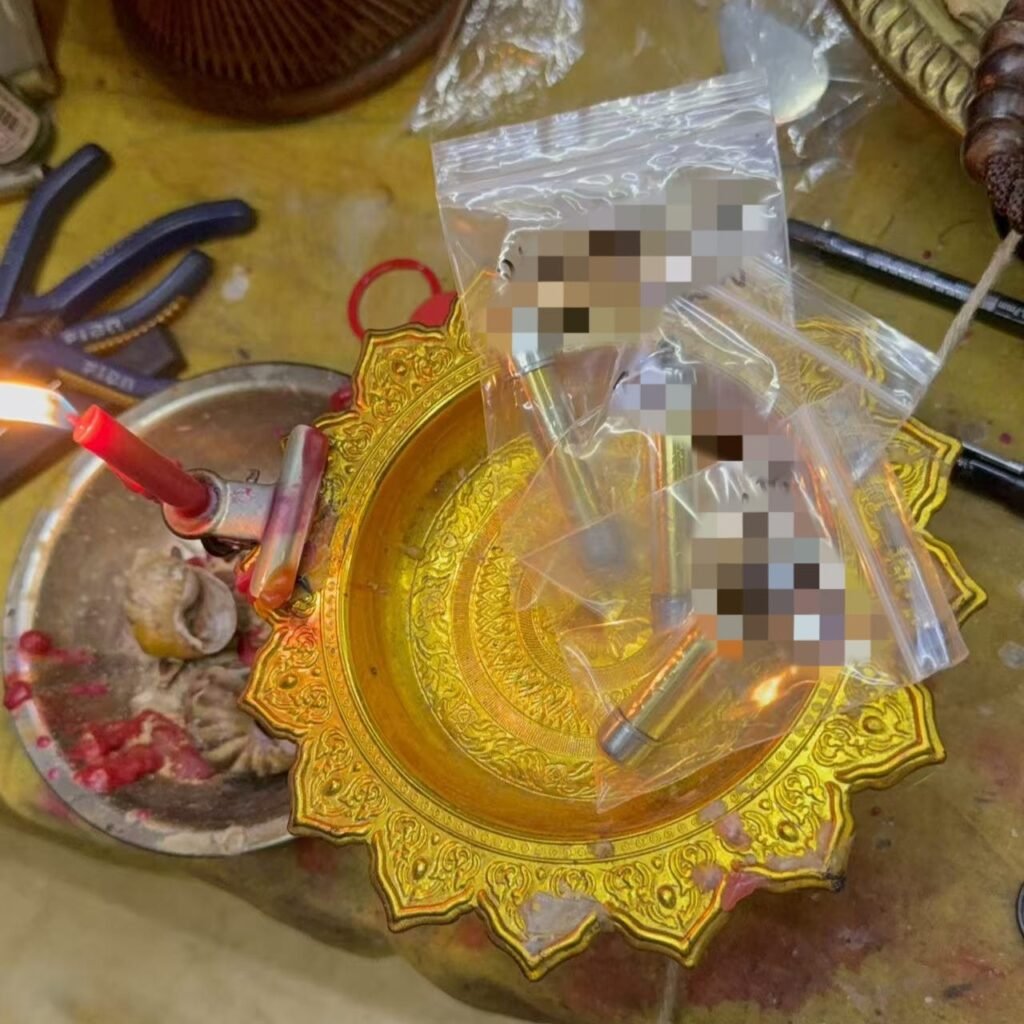
A takrut is physically quite simple. At its most basic, it begins as a sheet of metal, but what makes the finished piece more complicated is everything that happens to that sheet afterwards.
Phu Lersi Techo writes the yants according to the intended direction, after which the piece moves through repeated chanting and consecration. Earth, Water, Wind and Fire enter the preparation at different stages.
Later, he selects the materials according to the individual owner and the wicca involved. Only after those stages does the takrut move towards its final assembly and casing.
The finished piece may be small enough to hold in one hand, but the process behind it can take weeks.
For those interested in Phu Lersi Techo’s fully custom takruts, further details on the available options and current ordering information can be found here:
🔱𝑺𝒉𝒐𝒈𝒖𝒏𝑿 𝑨𝒎𝒖𝒍𝒆𝒕𝒔
𝑾𝒉𝒆𝒓𝒆 𝒚𝒐𝒖𝒓 𝒔𝒑𝒊𝒓𝒊𝒕𝒖𝒂𝒍 𝒋𝒐𝒖𝒓𝒏𝒆𝒚 𝒃𝒆𝒈𝒊𝒏𝒔
WhatsApp directly: https://wa.me/6580444447/
Email: shogunxamulets@gmail.com