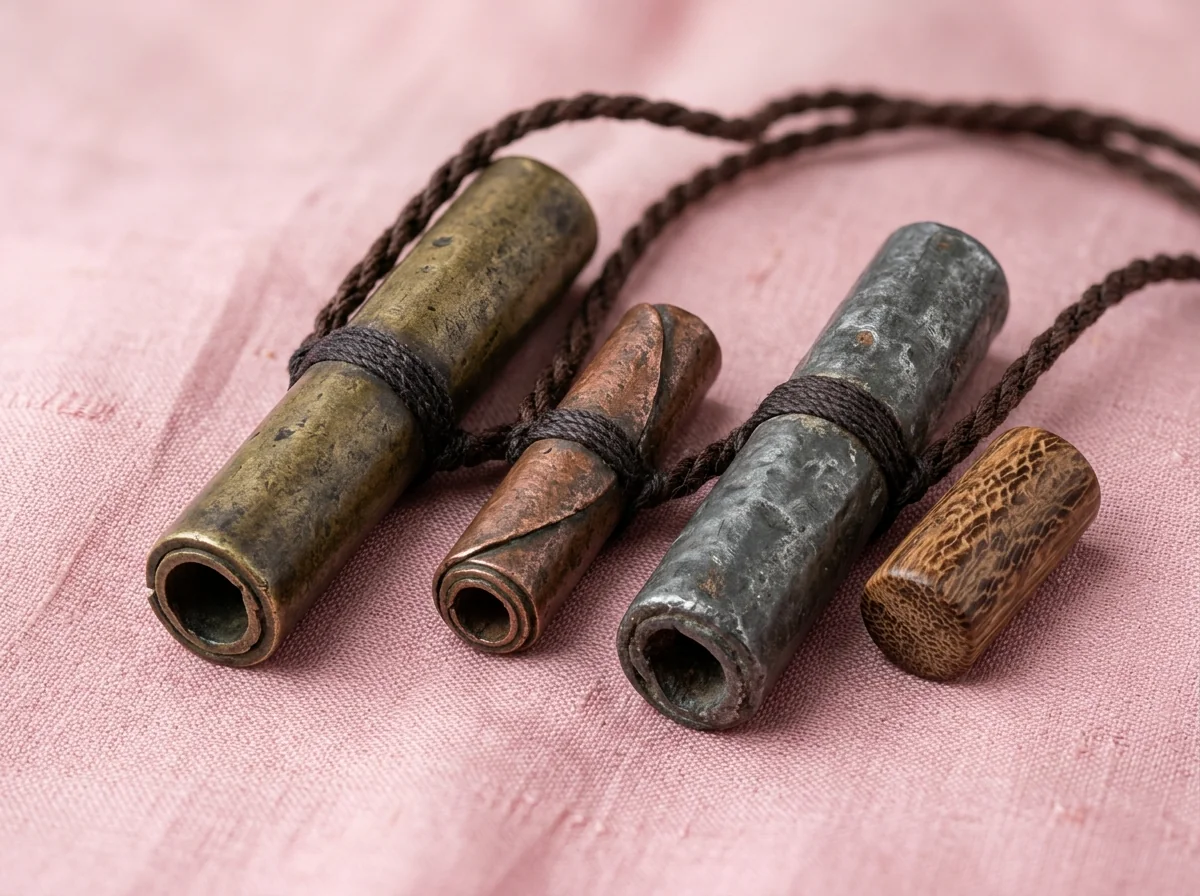
What is a saneh takrut?
A saneh takrut is a takrut made for charm and attraction. A takrut usually begins as a metal sheet inscribed with yants, which is then rolled, tied or cased. Saneh is the Thai term for charm and attraction, so these pieces focus on how other people notice, warm to and respond to the keeper.
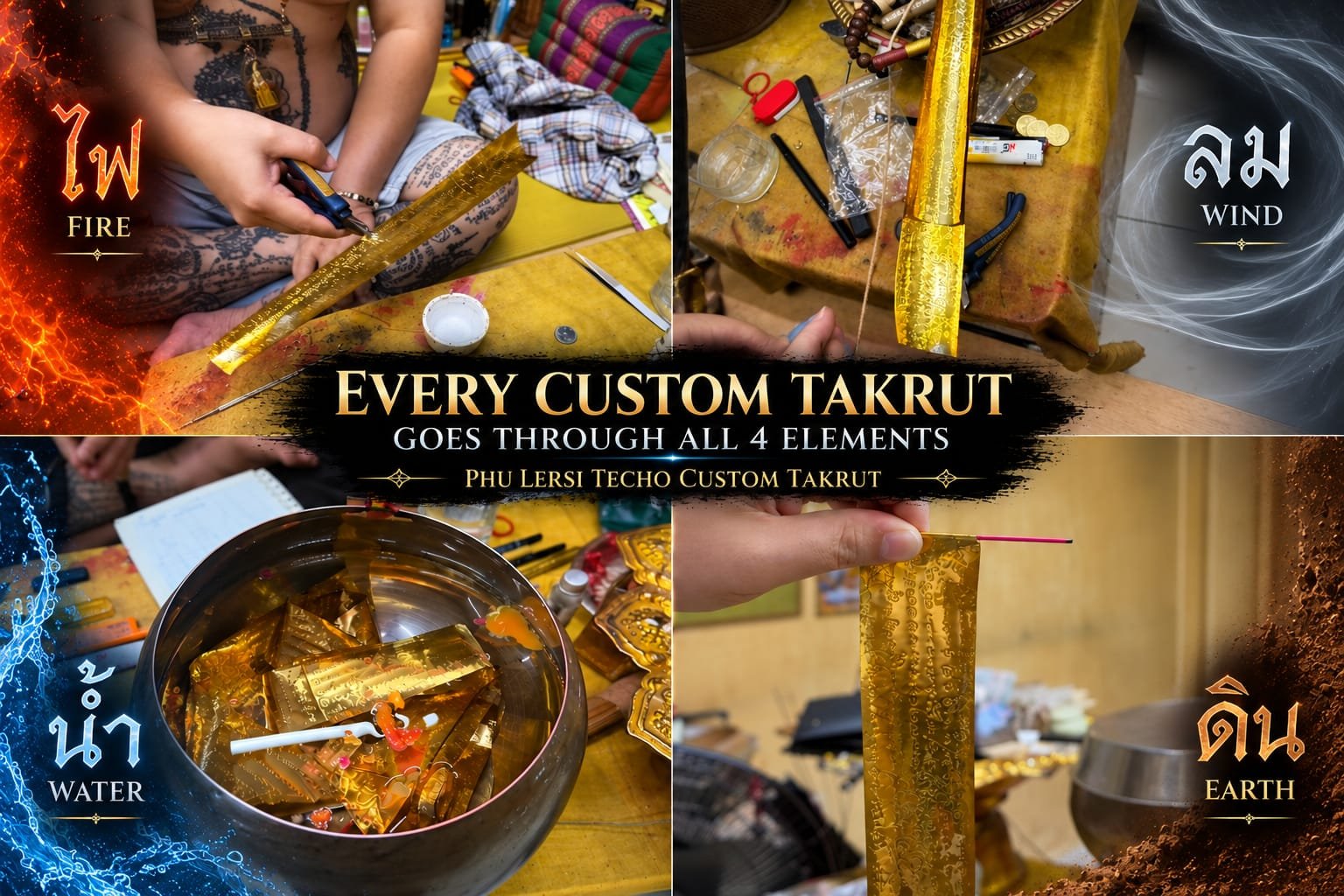
ShogunX’s account of Phu Lersi Techo’s custom takruts shows how much happens before a takrut is finished. The yants are written on the sheet first, the piece goes through weeks of chanting and consecration, and only then is it rolled, filled and cased. The finished object looks simple, which is why the maker, the wicca and the consecration matter more than outer appearance. The same holds for saneh takruts, whose effect is described in terms of how others respond rather than how the wearer looks.
The owner’s glossary separates a few related charm terms. Maha saneh refers to attraction, maha metta to being loved by people all around, and metta maha niyom to the effect of loving-kindness. Saneh takruts often combine these. Ajarn Wanchai’s mini takrut, for example, places the Exploding Heart Yant beside yants for chok larp (luck), ngern thong (wealth), metta and maha niyom, so one small piece covers attraction, popularity and fortune together.
How do the Na Ok Tek and Na Ok Taek takruts differ?
Both carry the Exploding Heart Yant, spelled Na Ok Tek or Na Ok Taek, traditionally associated with affection, longing and emotional pull. The difference lies in age, maker and what sits alongside the yant: one is an old BE 2551 piece with a second wicca, the other a recent super mini with wealth and luck yants.
The Takrut Bua Bang Bai Na Ok Tek was made in BE 2551 by Ajarn Gao, the low-profile right-hand man of Ajarn Meng, with Ajarn Nut and Ajarn J assisting and Ajarn Meng performing the final blessing. Only 30 were made, each hand-inscribed on lead and then rolled and tied one by one. It holds two separate wiccas: Na Ok Tek for heart-moving attraction, and Bua Bang Bai, the Lotus Fairy wicca for quiet, hidden charm, which masters can only make when the timing and year are right.
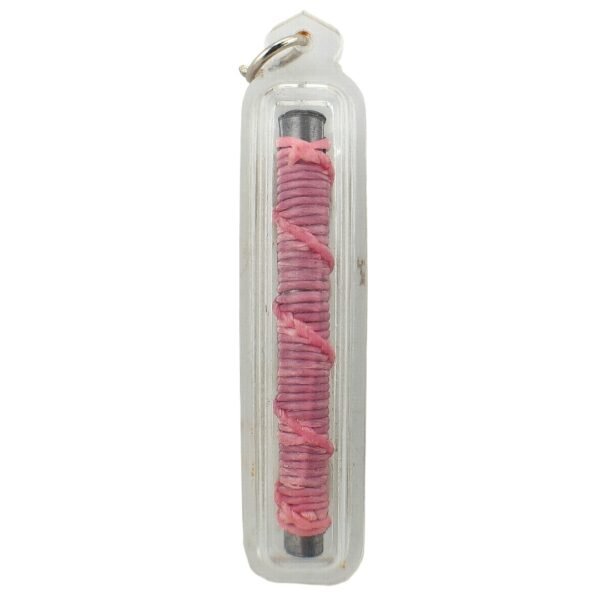
Ajarn Wanchai’s Yant Na Ok Taek takrut dates from BE 2566 and measures about 4.5 by 1.6 cm, which makes it easy to wear daily. It is wrapped in traditional handwoven string, as takruts were in earlier times to protect the sacred metal, and comes in a waterproof casing after months of chanting. Where the older piece leans towards love, warmth between couples and favour in customer-facing work, this mini spreads its yants across charm, popularity, luck and wealth.
How do keepers wear a saneh takrut?
Most keepers wear a saneh takrut on the body or carry it close, setting a clear intention first. For the Bua Bang Bai Na Ok Tek piece, the master gave no special prohibition and no katha is required, though it should still be kept respectfully, like any spiritual item.
The Mai Yae Yae takrut is a different kind of saneh piece, built from wood rather than inscribed metal. Mai Yae Yae has a slender, snake-skin-like texture and is traditionally believed to give the wearer a warm, glowing aura that helps when convincing or persuading others. Wild wood is considered stronger than farmed, and genuine pieces are now hard to find, with other woods used as substitutes. Kruba Thep first showed the shop this wood, and over the years he gave much of his own away.
The shop later obtained a small amount of the wood and divided it into six takruts. Phu Lersi Pong encased them in real silver in BE 2568, and they stayed with him to be chanted over until the March event, after which only a few were available. Before any of this, the shop owner had worn the piece Kruba Thep gave him almost daily for around six months, which is what started the search for more of the wood. As the listing notes, plain pieces made from one or two rare materials are often the kind masters themselves carry.
Lineage & Sacred Material Comparison Matrix
| Takrut | Maker and year | Wicca or material |
|---|---|---|
| Bua Bang Bai Na Ok Tek | Ajarn Gao, final blessing by Ajarn Meng, BE 2551 | Two saneh wiccas hand-inscribed on lead; 30 made |
| Yant Na Ok Taek (super mini) | Ajarn Wanchai, BE 2566 | Exploding Heart Yant with luck, wealth, metta and popularity yants |
| Mai Yae Yae | Phu Lersi Pong, BE 2568 | Wild snake-skin-textured wood wrapped in real silver |
Pieces in the Shogun X Collection

Further Reading from Shogun X
Frequently Asked Questions (Singapore Collector FAQ)
Does the Bua Bang Bai Na Ok Tek takrut need a katha?
No katha is required for this piece. The master also gave no special prohibition for it. Keepers simply wear, carry or keep it close to the body, set their intention clearly beforehand, and treat it with the same respect they would give any spiritual item.
What is Mai Yae Yae wood?
It is a rare wood with a slender shape and a snake-skin-like texture that sheds scale-like flakes when scraped. It is traditionally linked with metta, saneh, popularity and luck. The wild variety is considered the stronger one, and genuine pieces have become hard to find.
Why is the mini Na Ok Taek takrut wrapped in string?
The string follows an old practice of protecting the sacred metal inside. Ajarn Wanchai’s mini takrut is wrapped in traditional handwoven string, the way takruts were wrapped in earlier times, and then placed in a waterproof casing so it can be worn every day.