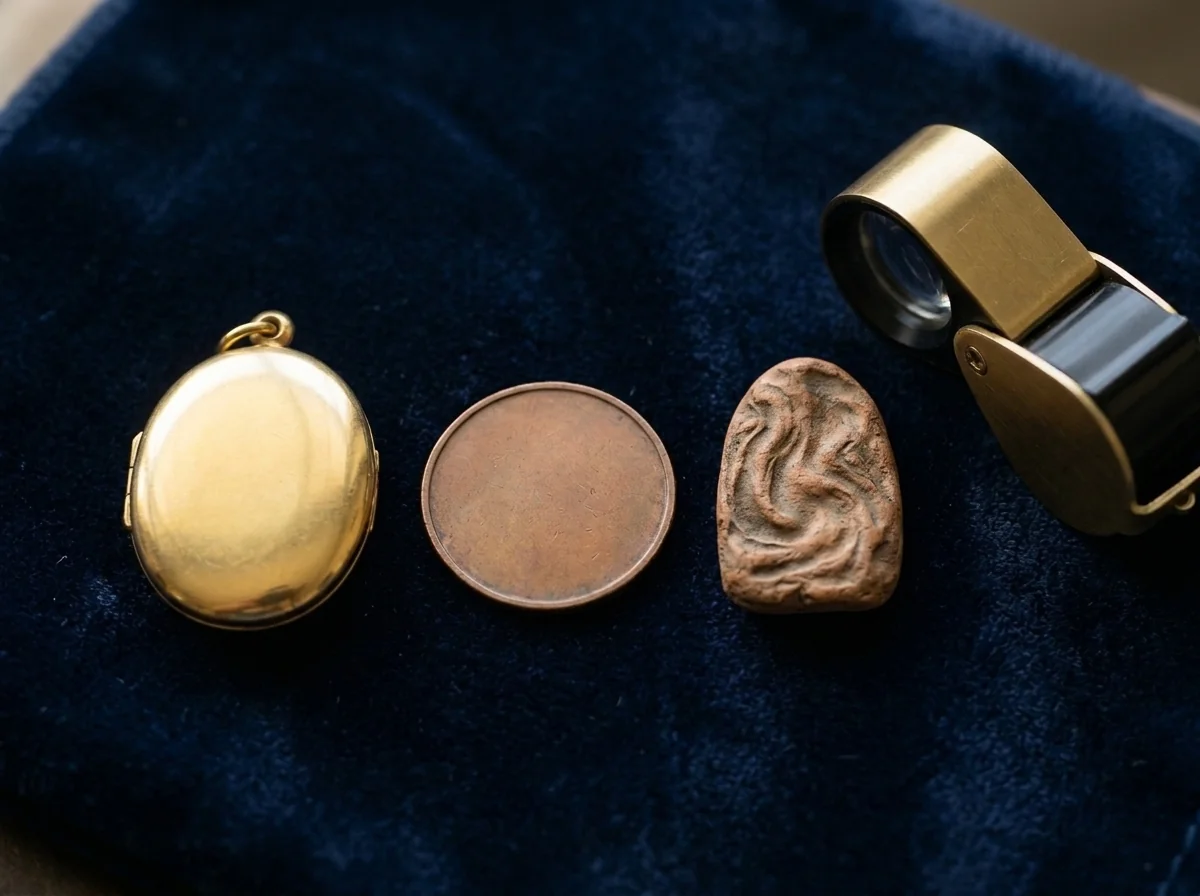
What does roon raek mean on a Thai amulet?
Roon raek means the first block or first batch of an amulet, while roon sutai marks the last. Thai amulet terms have no fixed English spelling, so the same idea can appear as roon raek, roon reak or simply First Batch in a shop listing, and all of them point to the same thing.
Shogun X’s glossary of common terms lists roon reak as the first block or batch and roon sutai as the last, alongside other words collectors meet often, such as rian for a medallion amulet and phim for a mould style. The same glossary warns that spellings have not been standardised, which is worth remembering when you search. In our own catalogue, Ajarn Nut’s Khun Paen locket carries the Thai term in its name, while other pieces simply say First Batch in English.
A first batch does not need to look grand. Ajarn Tom’s early piece, believed to come from one of the very first batches he consecrated after leaving the monkhood, is small and humble, quite unlike the bold designs he later became known for. Ajarn Rut’s first-batch Khun Paen is likewise simple, in keeping with the ancient methods he followed. With first batches, the story of when and why a piece was made often matters more than its finish.
Why do collectors value first-batch amulets?
Collectors value a first batch because it marks a beginning: a master’s first consecration of a particular deity or design, or one of the first pieces they ever made. These batches are often small, and some pieces spent years in a master’s own keeping before release, which adds to their interest.
The pieces in stock show this well. Kruba Thep Nimit’s Phra See Salang Ngaeng from BE 2567 is his first consecration of that deity, blessed for over four months with materials he collected himself, including his own hair. Ajarn Nut’s first-batch Lersi Sermingpai is among the earliest items he consecrated when he began his path as an Ajarn, with only about 30 to 50 made. He kept most of them for years and blessed them daily, and this one is his own worn piece, now re-cased.
Lineage plays a part too. Ajarn Rut, the late teacher of Ajarn Nut, made his first-batch Khun Paen in BE 2562, two years before he passed away, and Ajarn Nut co-blessed it. Inside are three small bottles: see pheung, nam man prai mixed with wan gai daeng, and his own wan saneh blend. Ajarn Tom’s early piece was made with prai wicca and materials passed down by his first teacher, a monk whose name remains unknown, and a close disciple kept it for over a decade.
How do I read the batch size and BE year on a listing?
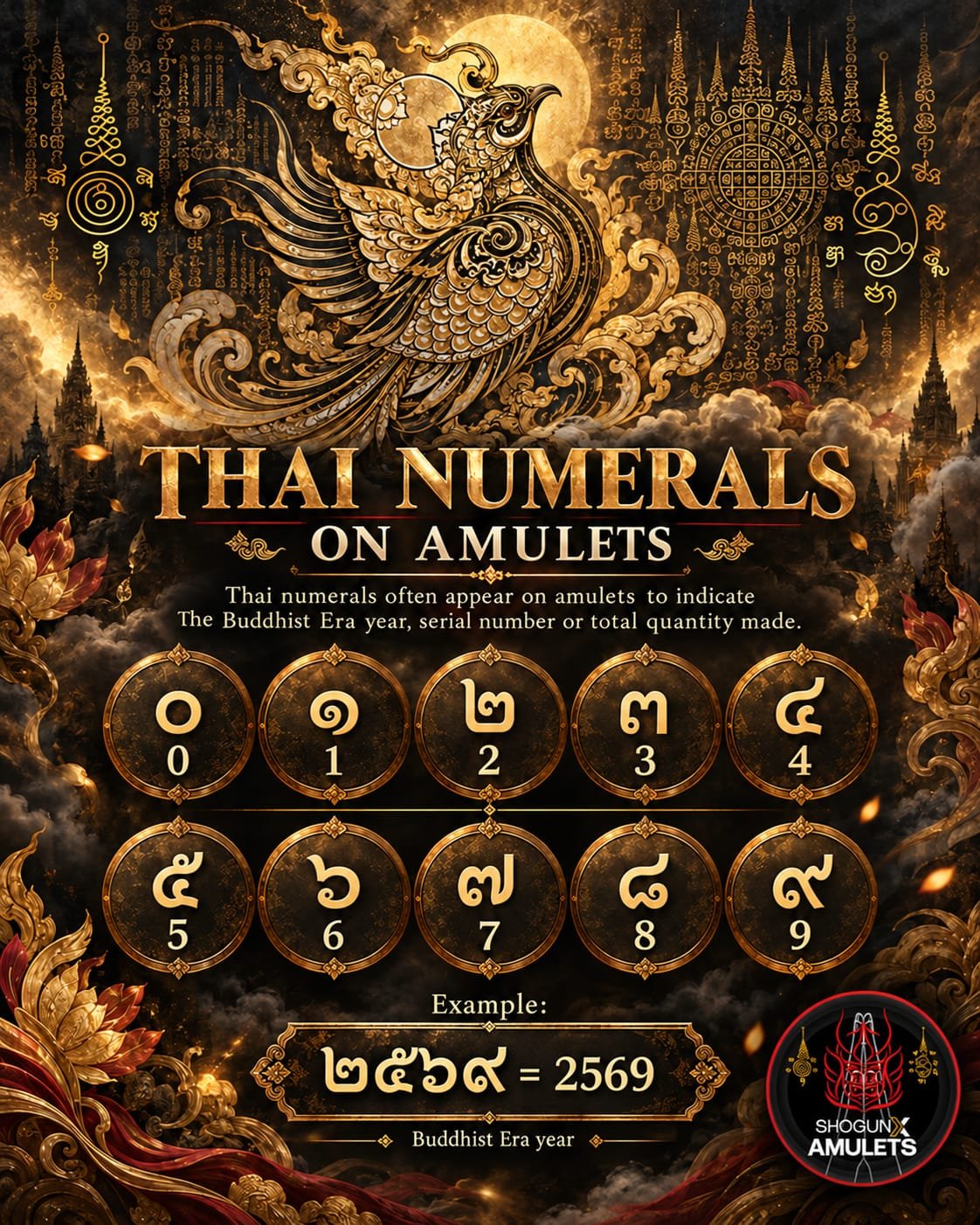
Start with the maker and the Buddhist Era year, then look for the number made. Subtract 543 from a BE year to get the modern Western year, so BE 2568 is 2025. Batch sizes may be exact, a range or unknown, and some pieces also carry a serial number within the batch.
Our listings show how this works. Ajarn Nut’s Khun Paen Roon Reak locket reads BE 2560 with 100 made, while his first-batch rian reads BE 2562 with 300 made, in what began as four materials: black oxidised copper, rainbow copper, lead and silver, with only rainbow copper left. Kruba Thep’s Phra See Salang Ngaeng lists 110 made of each, and each piece carries a temple code and its own serial number. Details like these help you place a piece within its batch.
Some listings are open about uncertainty. The first-batch Lersi Sermingpai gives BE 255X marked as an estimate, with a range of 30 to 50 pieces, and Ajarn Tom’s early piece also gives BE 255X. On the amulets themselves, years and serial numbers may be written in Thai numerals, which follow the same decimal system as ours; for example, ๑๐๘ reads as 108. Not every number on an amulet is a serial number, so check the batch details before drawing conclusions.
Lineage & Sacred Material Comparison Matrix
| Piece | Maker and year | Batch details as listed |
|---|---|---|
| Khun Paen Roon Reak locket | Ajarn Nut, BE 2560 | 100 made; unworn piece from his own collection |
| First Batch Rian | Ajarn Nut, BE 2562 | 300 made in four materials; only rainbow copper remains |
| First Batch Lersi Sermingpai | Ajarn Nut, BE 255X (estimate) | About 30 to 50 made; his personally worn piece, re-cased |
| Phra See Salang Ngaeng | Kruba Thep Nimit, BE 2567 | 110 made of each; temple code and serial number |
Pieces in the Shogun X Collection
-

Khun Paen Roon Reak; First Batch Khun Paen locket by Aj Nut.
SGD $148.00 Add to cart -
Phra See Salang Ngaeng – First Batch
Price range: SGD $88.00 through SGD $138.00 Select options This product has multiple variants. The options may be chosen on the product page -
First Batch Khun Paen (By the Teacher of Ajarn Nut)
SGD $158.00 Add to cart

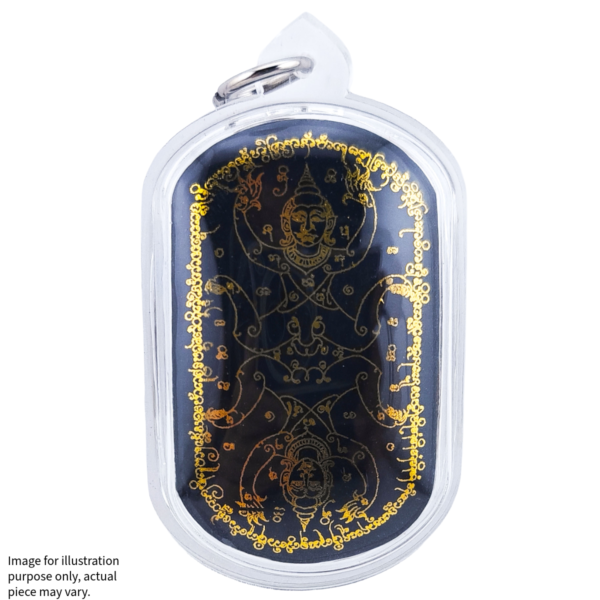

Further Reading from Shogun X
Frequently Asked Questions (Singapore Collector FAQ)
How do I convert a BE year on an amulet?
Subtract 543 from the Buddhist Era year. Shogun X’s guide to Thai numerals gives BE 2568 as 2025 and BE 2550 as 2007. Depending on the maker and the batch, the year may appear in Thai numerals on the amulet itself or only in the listing.
What does unworn mean on a first-batch listing?
It means no keeper has worn the piece before. Ajarn Nut’s Khun Paen Roon Reak locket and Ajarn Rut’s first-batch Khun Paen are both described as unworn, while the first-batch Lersi Sermingpai is the opposite: Ajarn Nut wore it himself during ceremonies and while working with prai, and it shows light, natural wear.
Does every amulet have a serial number?
No, many do not. Serial numbers appear mainly on numbered or limited batches, and some makers use numbers for other markings or codes. Kruba Thep’s first-batch Phra See Salang Ngaeng is one example that carries both a temple code and an individual serial number.