Description
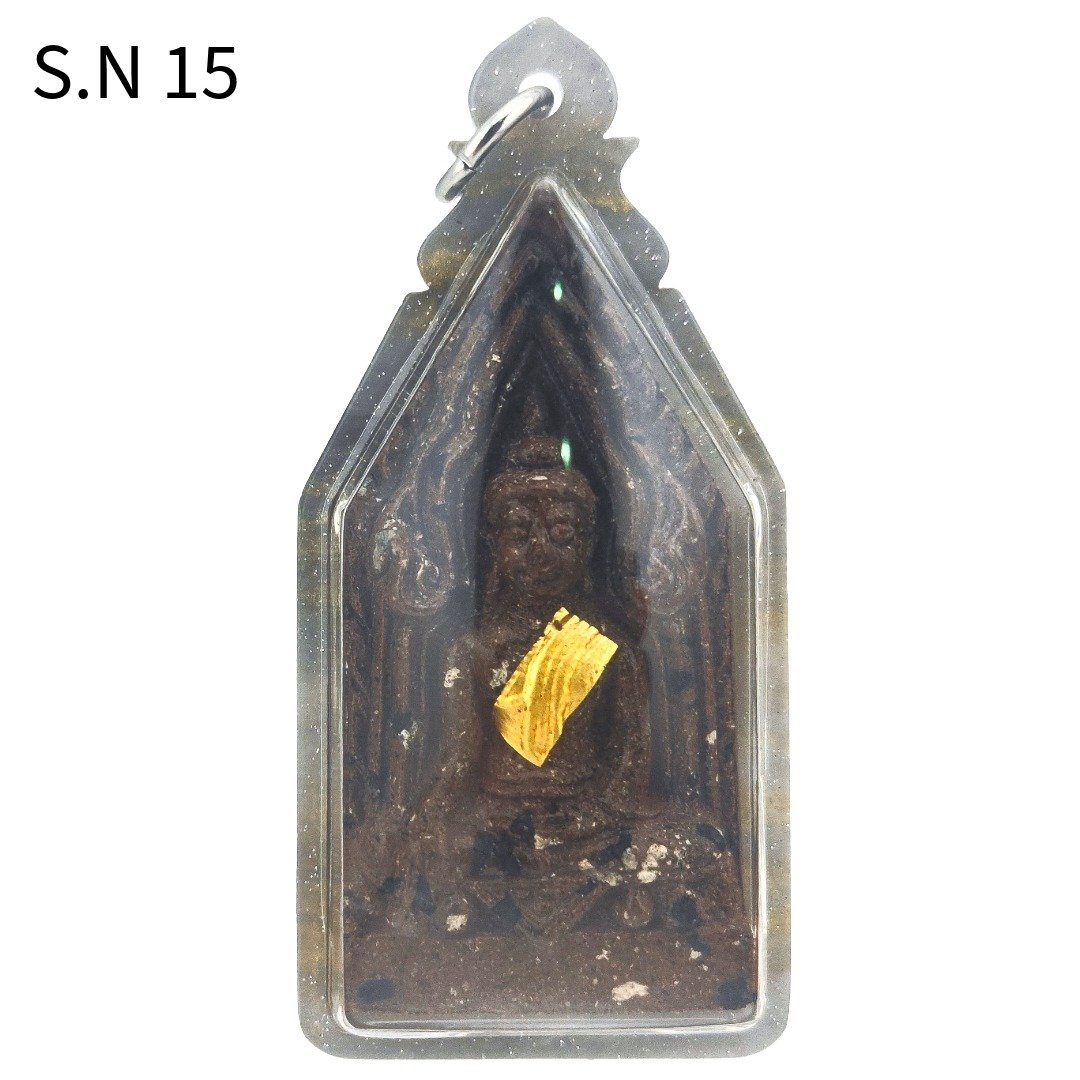
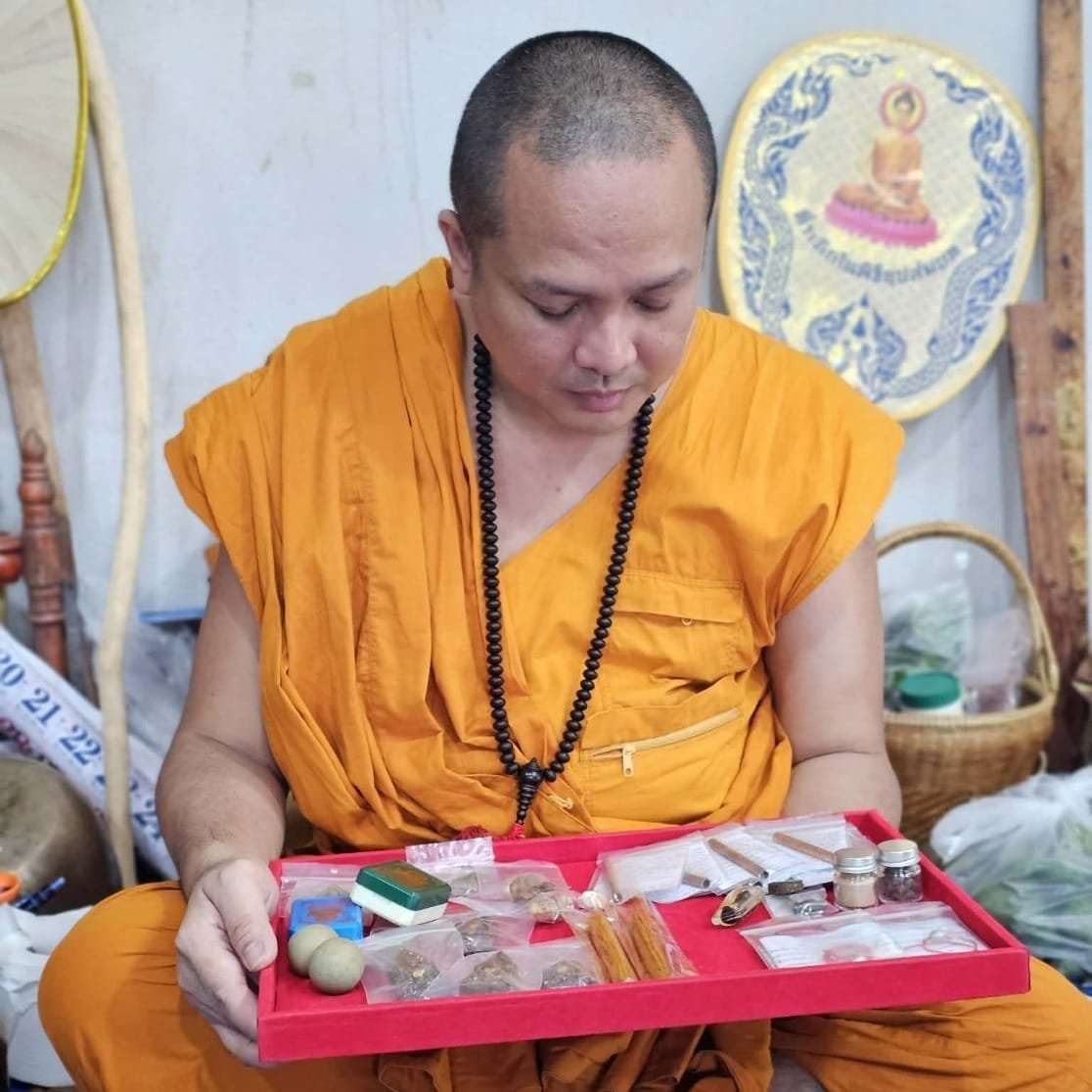
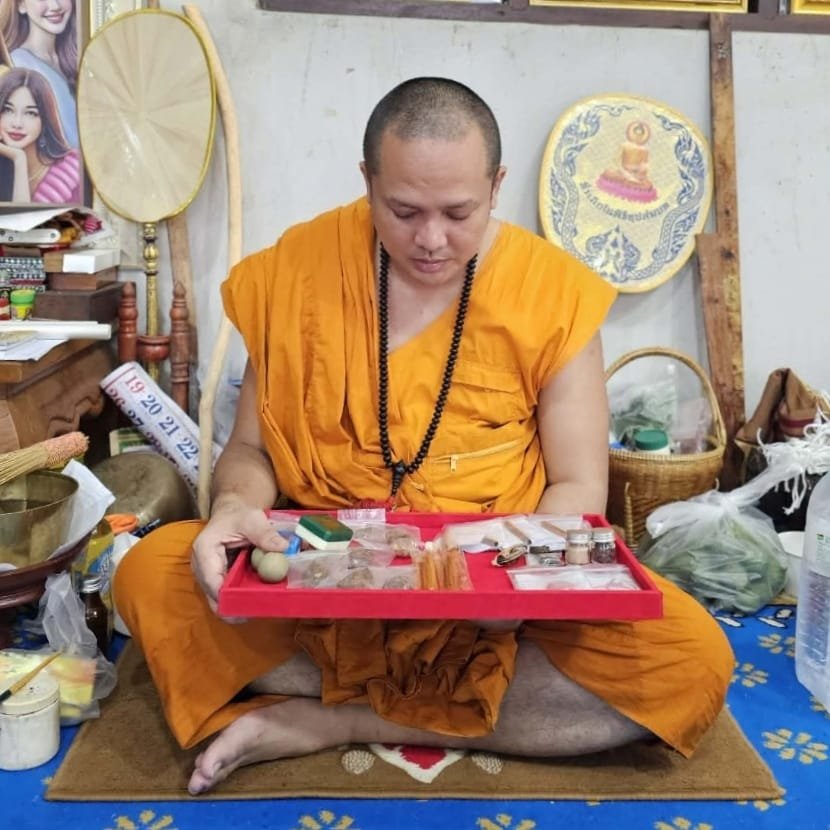
Kruba Chokchai Chayawuttho (Wat Nam Dib) | BE 2568 (Estimated) | Size: 7.5 × 3.5 cm
Plenty of Khun Paen carry claims of strong Saneh. But when you look into their actual materials, how many bring together Prai from some of Thailand’s most famous masters? This 7 Nang Fah Khun Paen contains Prai Mae Som of Luang Pu Tim, Pong Prai Kuman of Luang Phor Tae, and Ajarn Pleng’s old Prai powder.
Three legendary masters, each with their own history and reputation among serious Thai amulet collectors. And that’s before we get into Kruba Chokchai’s seven angels and Lukkok, both part of the powder mixture.
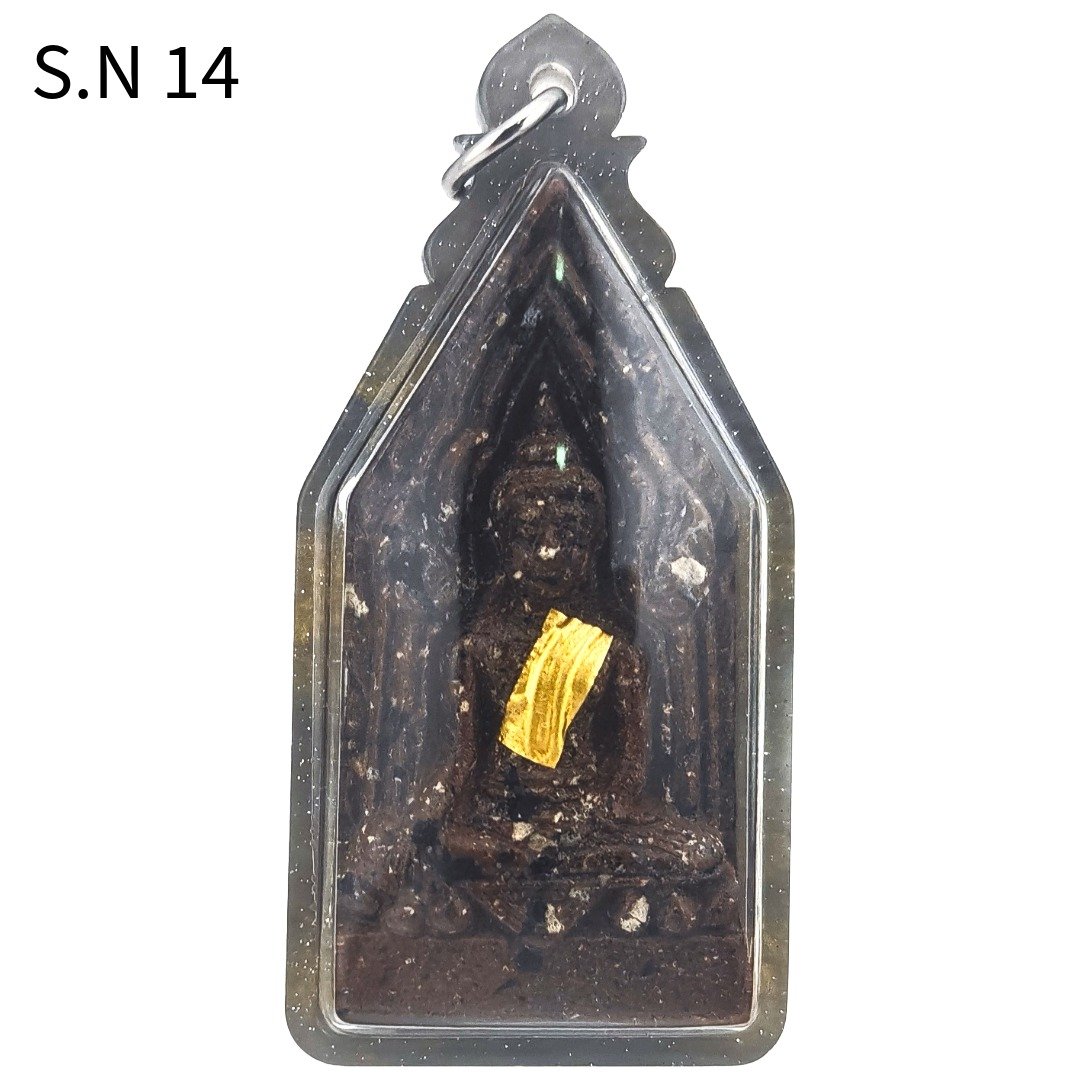
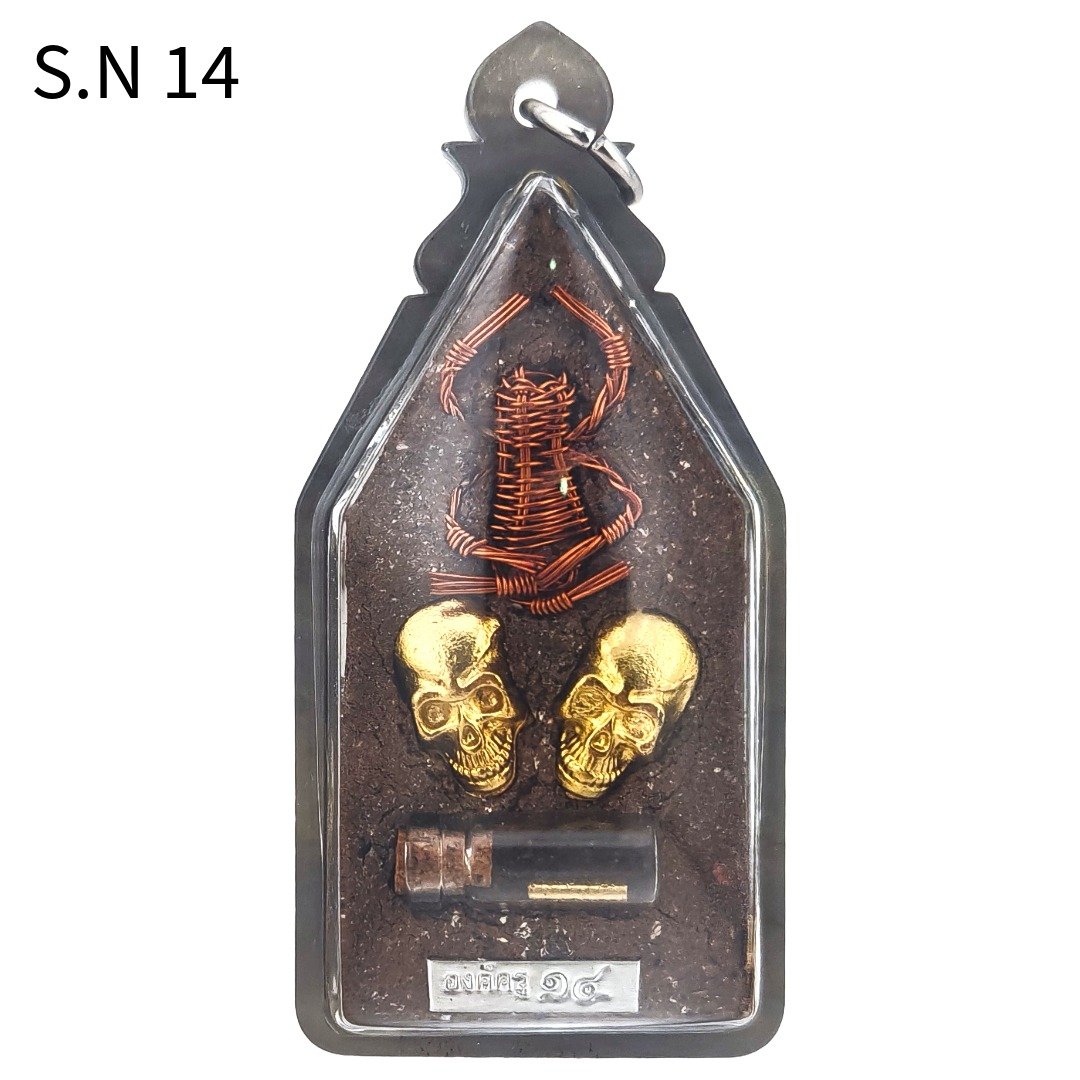
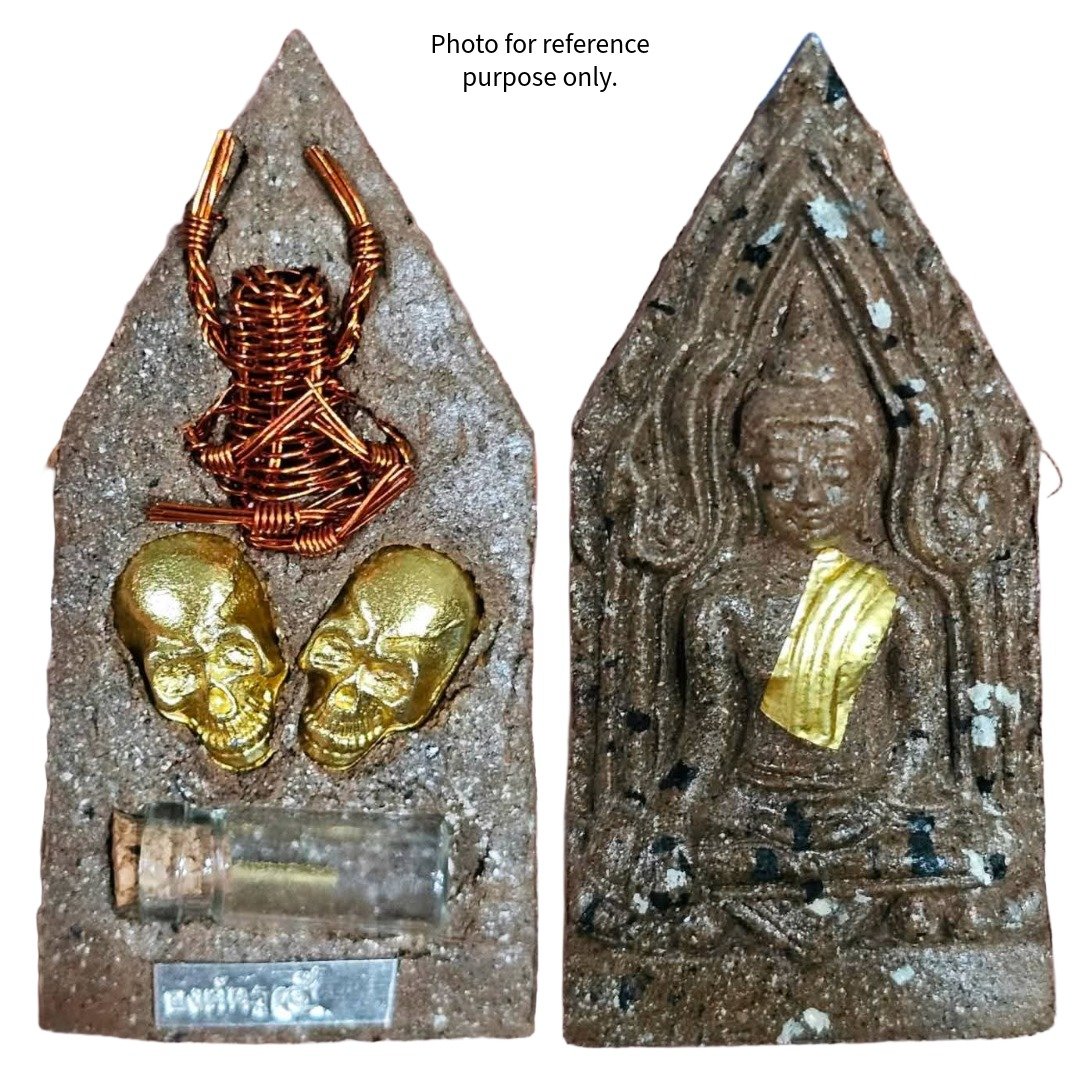
Then there are the visible additions. A real gold sash on the front, a bottle on the back containing a genuine gold Ah Jor Jà Sin takrut, two Prai Kasip and a hand-woven Hoon Payon. Quite a combination for one Khun Paen.
More importantly, these materials don’t all serve the same purpose. Their traditional functions cover Maha Saneh, Metta, fortune, influence, spiritual assistance, guidance and protection. And the histories behind some of these materials are just as interesting as the piece itself.
Luang Pu Tim – The Famous Prai Mae Som
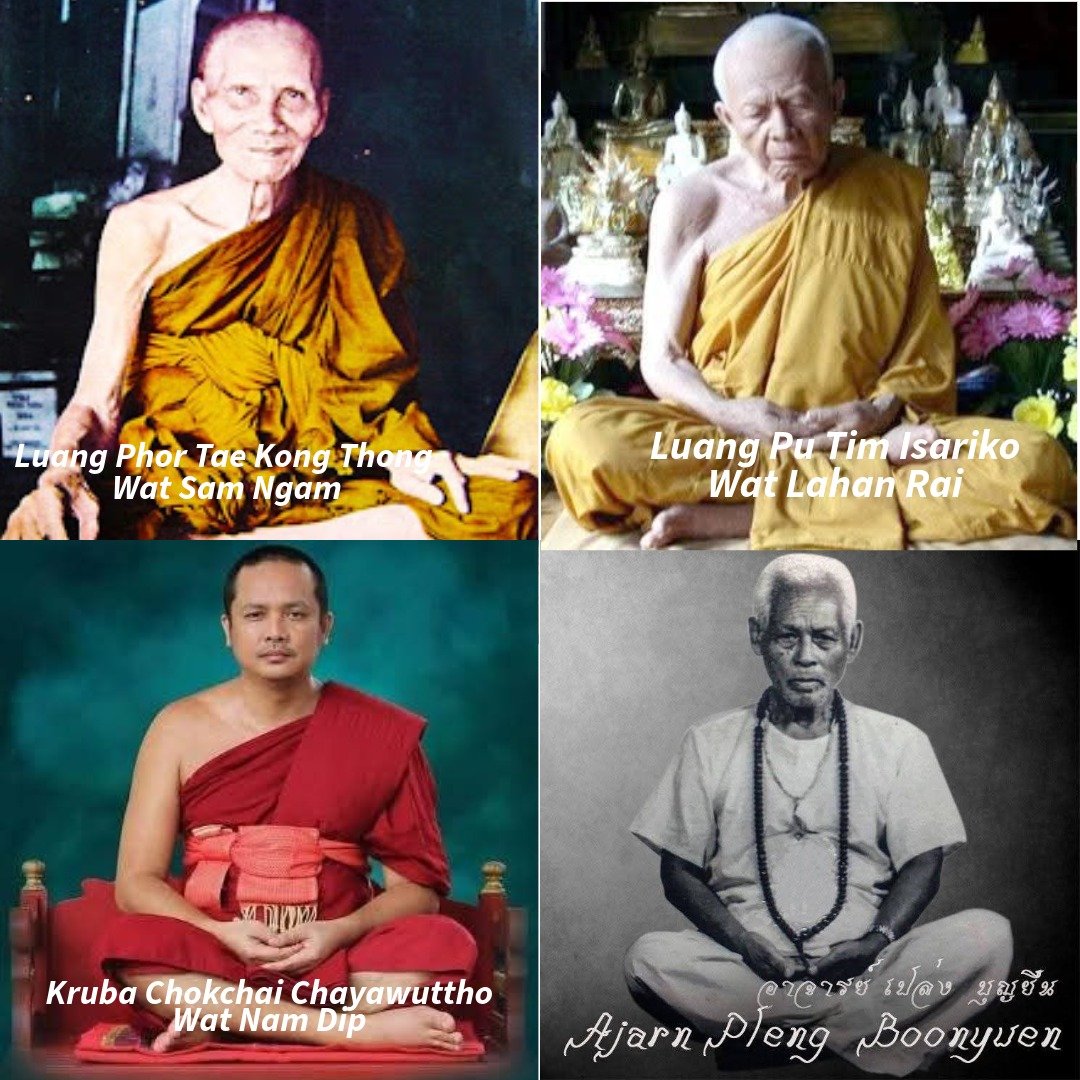
Luang Pu Tim Isariko of Wat Lahan Rai, Rayong, ranks among Thailand’s most recognised and respected amulet masters. Collectors still seek his original creations, particularly his legendary Khun Paen Phong Prai Kuman from the 1970s. Certain moulds command substantial prices, with collectors continuing to study their materials, history and authenticity decades later.
However, one of the most interesting parts of Luang Pu Tim’s Prai tradition concerns Prai Mae Som. According to traditional accounts, Mae Som was a woman who passed away while pregnant. Her story became closely connected to Luang Pu Tim and the preparation of his famous Prai materials.
Accounts from his disciples also describe unusual incidents during the preparation of these materials, including stories involving fire. Although the exact events remain matters of traditional accounts, they have become part of the legend surrounding his Prai tradition.
What makes Mae Som particularly significant is her identity. Prai Mae Som isn’t simply another unnamed female Prai. Collectors recognise her as a specific figure with close ties to one of Thailand’s most celebrated amulet masters and his legendary Prai tradition.
Traditional beliefs link Prai Mae Som to Maha Saneh, Metta Maha Niyom, attraction, fortune, opportunities and spiritual assistance. This Khun Paen contains Prai Mae Som of Luang Pu Tim. For collectors familiar with Luang Pu Tim, Mae Som alone is already an interesting material.
Luang Phor Tae – The King Of Kumanthong
Luang Phor Tae Kong Thong of Wat Sam Ngam, Nakhon Pathom, is another legendary name in the Thai amulet world. Many collectors regard him as the King of Kumanthong, and one of the greatest Kumanthong makers in Thailand’s history. His reputation is so closely connected to Kumanthong that mentioning Wat Sam Ngam immediately brings his creations to mind.
Luang Phor Tae reportedly inherited his Kumanthong-making knowledge from Luang Lung Daeng. He later built his reputation through years of traditional preparation and blessings. His famous Kumanthong, also known as Tukata Thong, involved special ritual materials. These included Din Jet Pa Cha, soil from seven cemeteries, Din Pong Jet Pong, soil from seven mineral-soil locations, and Din Khui Pu.
These materials and their preparation formed an important part of his traditional Kumanthong formula. Under traditional beliefs, his Kumanthong help their owners attract wealth and fortune, guard property, provide warnings and support business activities.
Luang Phor Tae passed away in BE 2524. However, collectors still hold his original Kumanthong in high regard, with his name firmly established in this tradition.
This Khun Paen contains Pong Prai Kuman of Luang Phor Tae. Although Luang Pu Tim and Luang Phor Tae both have connections to Prai Kuman, their traditions aren’t identical. Luang Pu Tim became especially famous for his Khun Paen Phong Prai Kuman, while Luang Phor Tae became one of Thailand’s most celebrated Kumanthong masters.
Having materials from both traditions in one Khun Paen is therefore different from simply adding more ordinary Prai powder.
Ajarn Pleng – The Master Behind The Famous 59 Prai
Moving away from the monk-created traditions, we have Ajarn Pleng Boonyuen of Tha Tum, Surin. Ajarn Pleng was a lay occult master with a background in Southern Isan and Khmer-influenced wicca. Interestingly, he also spent much of his working life in education and became a school administrator.
However, among collectors of traditional Prai amulets, he became famous for something entirely different. His Prai preparations, particularly the legendary Phong Prai 59 Ton. Traditional accounts link this formula to 59 Prai spirits, making it one of Ajarn Pleng’s most recognisable preparations.
His famous creations include Khun Paen Maha Saneh P.1, Khun Paen Chom Talat P.2, Khun Paen Sayop Man, Khun Paen Prai 59 Ton and Phra Pidta Prai 59 Ton. His early Khun Paen batches and 59 Prai creations remain particularly well known among collectors.
Ajarn Pleng’s reputation wasn’t limited to Maha Saneh either. Traditional accounts also credit his Prai wicca with protection against harmful occult influences. His followers describe his preparations as providing both attraction and protection.
Another important part of his legacy is his connection with Luang Phor Sawat of Wat Pa Saen Udom. According to published accounts, Luang Phor Sawat studied under Ajarn Pleng and accompanied him during the preparation of Prai materials. He later helped carry forward knowledge of these practices.
This Khun Paen contains Ajarn Pleng’s old Prai powder. We don’t know the exact original batch, so we’re not automatically identifying it as his famous 59 Prai formula. Nevertheless, it is old Prai powder from a master whose original creations still command considerable respect among serious Prai collectors.
7 Nang Fah – Kruba Chokchai’s Seven Named Female Prai
Now for the part that gives this Khun Paen its name. Kruba Chokchai Chayawuttho of Wat Nam Dib, Kamphaeng Phet, has a reputation among his followers for traditional occult knowledge, Prai preparations, special powders and various forms of wicca.
His family passed down occult knowledge, while he also studied Lanna and other regional traditions. According to accounts of his lineage, Kruba Chokchai grew up around traditional occult practices. He later studied different methods of preparing special materials, traditional powders and ritual formulas.
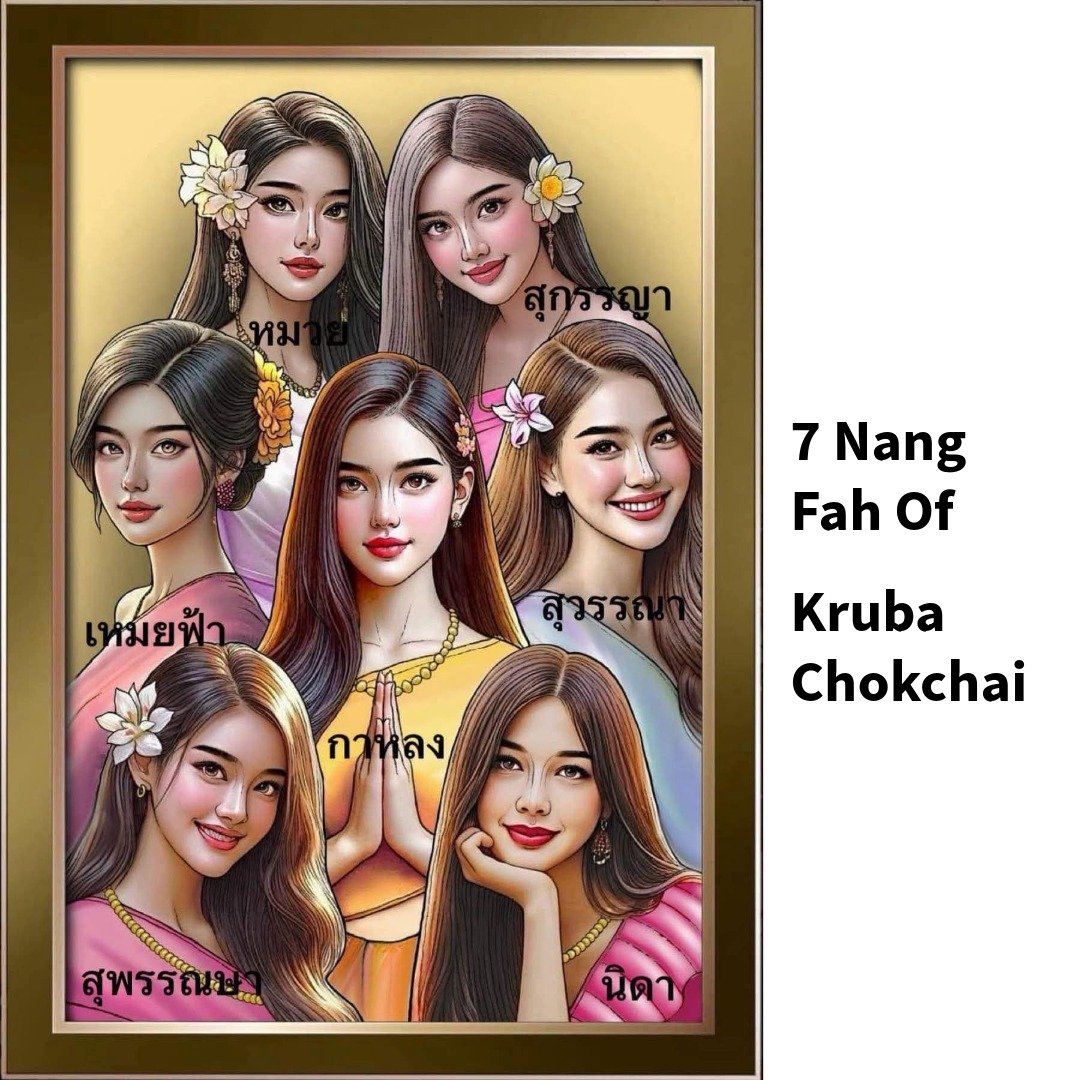
Among his distinctive Prai traditions are the 7 Nang Fah. Now, Nang Fah literally means angels or heavenly maidens. However, these particular seven aren’t celestial angels in the usual sense. They are seven named female Prai spirits, often referred to as the 7 Nang Fah rather than the 7 Nang Prai.
The seven Mae Prai are Mae Kalong, Mae Muay, Mae Sukanya, Mae Moei Fah, Mae Suwanna, Mae Suphansa and Mae Nida. Within Kruba Chokchai’s tradition, followers recognise each by name and venerate them collectively as a group.
Thai accounts describe special invocation practices involving the seven, along with the preparation of Phong 7 Nang Prai, a powder connected to these Mae Prai. Their collective traditional functions include Maha Saneh, Metta Maha Niyom, attraction, wealth, prosperity, windfall luck, attracting supporters and wish granting.
Sajja – Keeping One’s Word
However, followers repeatedly emphasise one important principle. Sajja – keeping one’s word.
According to the traditional teachings, those who venerate the seven Mae Prai should remain sincere, honour their promises and avoid dishonesty. Some Thai accounts even explain that sincerity matters more than perfectly memorising a katha.
The principle is simple. If you’re going to ask the seven Mae Prai for assistance, you should also honour your word. The powder mixture of this Khun Paen includes materials associated with Kruba Chokchai’s seven named Mae Prai.
So while the title calls them the 7 Nang Fah, collectors familiar with this tradition will know that these are actually seven named female Prai.
Lukkok – For Those Who Know
Another ingredient in the powder mixture is Lukkok, connected to an infamous temple case that once attracted considerable attention worldwide. The incident became so well known that it later inspired a Thai horror movie.
We won’t go into the details of that particular history here. Those familiar with the case should already know what we’re referring to.
Real Gold Inside & Out – The Ah Jor Jà Sin Takrut
Now that we’ve covered the powder materials, let’s look at the visible additions. One of the first things you’ll notice is the real gold sash across Khun Paen’s chest on the front. This isn’t ordinary gold paint applied to make the figure look more attractive.
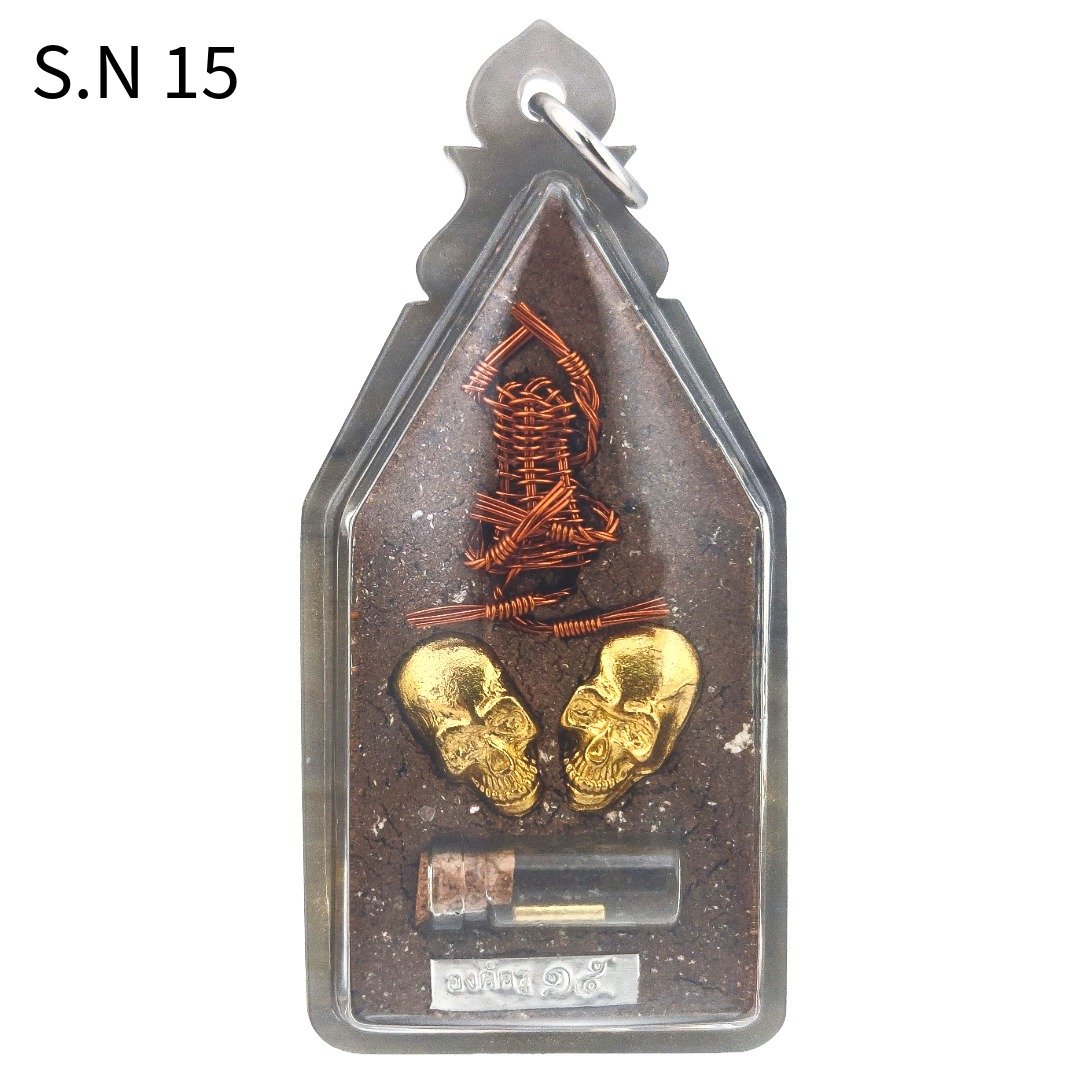
Turn the amulet around, and you’ll find another important addition. The small sealed transparent bottle on the back contains a genuine gold Ah Jor Jà Sin takrut, which carries the wicca known as Maa Kin Kwaam Kit.
Maa Kin Kwaam Kit – The Thought-Eating Dog Wicca
Maa Kin Kwaam Kit literally means Dog Eats Thoughts, often described as the Thought-Eating Dog wicca. And this isn’t simply another ordinary form of Saneh.
According to traditional accounts, Maa Kin Kwaam Kit is a wicca that can occupy another person’s thoughts. The idea is that someone feels increasingly drawn towards the practitioner. Their thoughts repeatedly return to that person, creating fascination, attachment and, in stronger accounts, even obsession.
Some traditions describe it as a form of brainwashing wicca, referring to the belief that the practitioner can occupy and heavily influence another person’s thoughts. This is why Maa Kin Kwaam Kit has traditionally carried a reputation beyond simple attraction. Its traditional functions include influence, persuasion, fascination, desire, loyalty, authority and control.
The traditional applications also extend beyond romantic relationships. In business, practitioners seek it for negotiations, attracting customers, encouraging repeat patronage and gaining favourable responses. Meanwhile, in matters of Saneh, practitioners seek it for strong attraction, emotional attachment and the desire to remain close to someone.
The symbolism behind the wicca is straightforward. Just as a loyal dog repeatedly returns to its owner, Maa Kin Kwaam Kit is traditionally believed to make another person’s thoughts do the same. Certain Ah Jor Jà Sin formulas also place particular importance on genuine gold sheets rather than ordinary metals.
So when we say real gold inside and out, we’re talking about two different components. The real gold sash is visible on the front. Meanwhile, the small bottle on the back holds the genuine gold Ah Jor Jà Sin takrut.
One is part of the Khun Paen’s physical presentation, while the other carries its own traditional influence and persuasion-related wicca.
Two Prai Kasip & A Hand-Woven Hoon Payon
The back carries another interesting combination. At the top is a hand-woven Hoon Payon, with metal wire carefully forming a human-like figure.
Hoon Payon belongs to a traditional guardian wicca. Different masters have created Hoon Payon using straw, thread, wood, metal and other materials. Their forms may vary, but the traditional purpose usually centres on guarding and protection. Tradition credits them with watching over owners, protecting belongings, guarding property and helping keep harmful influences away.
This particular Hoon Payon is hand-woven, with the wire forming its head, body, arms and legs. Below it are two Prai Kasip, which appear as two gold-coloured skull forms.
Collectors commonly call Prai Kasip Whispering Prai. The name comes from the traditional belief that they may provide hints, warnings or guidance to their owner, particularly concerning situations that are difficult to predict.
Collectors therefore seek them for intuition, recognising opportunities, receiving warnings and spiritual assistance. In addition, collectors traditionally seek Prai Kasip for wealth, business opportunities, fortune, protection and wish granting.
While collectors seek the Prai Kasip for guidance and assistance, the Hoon Payon takes on the traditional guarding and protective role. Together, these components add another dimension to a Khun Paen already filled with famous Prai materials.
More Than An Ordinary Prai Khun Paen
What makes this Khun Paen interesting isn’t simply the number of materials inside. It’s how the piece brings together different histories and traditions.
The three legendary masters bring their own Prai heritage, while Kruba Chokchai’s seven angels and Lukkok add another side to the powder mixture. Meanwhile, the genuine gold takrut, two Prai Kasip and hand-woven Hoon Payon introduce other traditional functions beyond Maha Saneh and Metta.
For collectors familiar with these masters and their creations, there is considerably more here than another ordinary Saneh Khun Paen.
𝗘𝗳𝗳𝗲𝗰𝘁𝘀 – –
Based on ancient & traditional beliefs, this is said to:
- Strengthen Maha Saneh, attraction, personal charm and desire.
- Encourage Metta Maha Niyom, popularity and favourable treatment from others.
- Increase personal influence, persuasion and the ability to leave lasting impressions.
- Encourage fascination, emotional attachment, loyalty and obsession.
- Support business negotiations, attract customers and encourage repeat patronage.
- Attract wealth, prosperity, beneficial opportunities and windfall luck.
- Gain support from helpful patrons, superiors and influential people.
- Provide Prai assistance, spiritual guidance and wish granting.
- Strengthen intuition and awareness of potential opportunities or warnings.
- Offer guarding and protection against harmful occult influences.
🔱𝑺𝒉𝒐𝒈𝒖𝒏𝑿 𝑨𝒎𝒖𝒍𝒆𝒕𝒔
𝑾𝒉𝒆𝒓𝒆 𝒚𝒐𝒖𝒓 𝒔𝒑𝒊𝒓𝒊𝒕𝒖𝒂𝒍 𝒋𝒐𝒖𝒓𝒏𝒆𝒚 𝒃𝒆𝒈𝒊𝒏𝒔
WhatsApp directly: https://wa.me/6580444447/
Email: shogunxamulets@gmail.com


Reviews
There are no reviews yet.