FREE Shipping in Singapore (All Items) | $10 to Malaysia & Brunei | $15 to everywhere else | $60 vis FEDEX or $30 Vis SingPost to USA
* Overseas rate applies to small items only - large items may cost more.
FREE Shipping in Singapore (All Items) | $10 to Malaysia & Brunei | $15 to everywhere else | $60 vis FEDEX or $30 Vis SingPost to USA
* Overseas rate applies to small items only - large items may cost more.
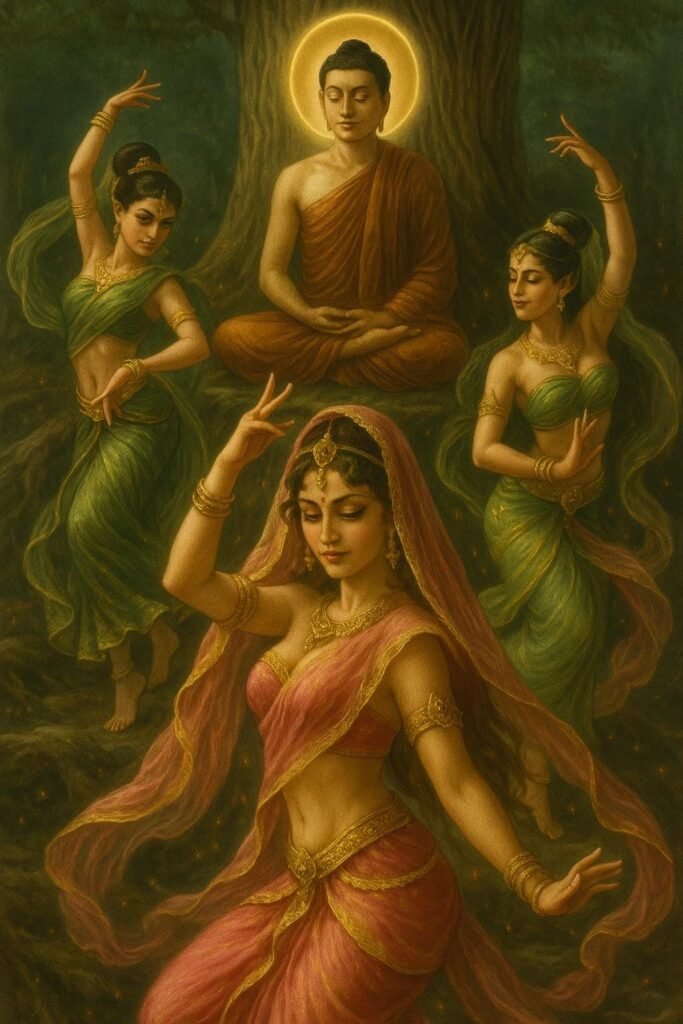
Although the term Luk Phaya Marn (ลูกพญามาร) appears occasionally in Thai occult discussion, most people outside Thailand do not fully understand what it refers to.
In Buddhist storytelling and Thai esoteric interpretation, Luk Phaya Marn refers collectively to the three symbolic daughters of พญามาร (Phaya Marn). Each daughter represents a different form of desire that challenges the human mind.
In Thai tradition, พญามาร (Phaya Marn) names the figure known in English as Māra. Western explanations often compare Māra to a “god of evil” or Satan. However, these comparisons exist only to clarify function, not to equate belief systems. In both cases, the figure represents forces that obstruct clarity and awakening.
Rather than literal beings, the three daughters of Phaya Marn function as personifications. Buddhist doctrine uses them as teaching tools to explain how desire, attachment, and restlessness arise within the mind.
In other words, these three daughters are Luk Phaya Marn.
Luk Phaya Marn Explained — The Three Daughters
ตัณหา (Taṇhā) — Craving
Taṇhā represents craving — the persistent sense of “wanting more.”
As craving takes hold, the mind turns outward in search of pleasure, validation, comfort, or possession. Even after one desire feels satisfied, Taṇhā rarely fades. Instead, it redirects attention toward the next object of longing.
Because of this cycle, satisfaction often feels temporary rather than lasting.
ราคา / ราคะ (Rāga) — Lust & Attachment
Rāga represents emotional heat and attachment.
Through attraction and passion, Rāga binds the heart tightly to people, experiences, or outcomes. As attachment strengthens, clarity weakens. Consequently, letting go becomes difficult, even when awareness understands the cost.
This quality gives Luk Phaya Marn its seductive nature — not through force, but through emotional pull.
อรดี / อรติ (Aratī) — Restlessness & Discontent
Aratī represents dissatisfaction with restraint, discipline, and stillness.
When Aratī arises, calm feels uncomfortable. Effort feels restrictive. As a result, the mind seeks distraction, novelty, and movement instead of stability. Often, this force works quietly and persists longer than expected.
Among the three daughters, Aratī tends to disrupt practice most subtly — yet consistently.
A Force That Reaches Any Mind Still Bound to Desire
According to Buddhist commentary, craving, attachment, and restlessness influence any being still governed by desire. This influence extends not only to humans, but also to devas — beings who exist within realms shaped by craving.
Where desire remains, Luk Phaya Marn exerts its pull.
At the same time, the tradition highlights one defining contrast:
Only a mind completely free from desire remained unmoved.
Rather than a tale of domination or supernatural seduction, this story teaches how universal desire truly is — and how rare freedom from it can be.
From Buddhist Teaching to Thai Wicca
Because these forces describe inner temptation itself, Thai spiritual culture never treated them casually.
Within Buddhist explanation, they appear as warnings about the workings of an untrained mind. Over time, Thai esoteric and occult interpretation grouped them collectively as Luk Phaya Marn — a wicca concept linked to attraction, presence, and subtle emotional influence.
In this context, Luk Phaya Marn does not refer to spirits that demand worship. Instead, it reflects a symbolic pattern of influence — an identity that describes how desire quietly shapes attention and behaviour.
By nature, this influence remains subtle.
Because of that, it rarely announces itself loudly.
Why This Knowledge Remains Rare Outside Thailand
Outside Thailand, few people encounter the concept of Luk Phaya Marn.
This absence occurs for several reasons. First, introductory Buddhist material rarely explores symbolic psychology in depth. Second, this theme relies more on interpretation than mythology. Finally, monks and ajarns often reserve such explanations for deeper teaching contexts.
As a result, this knowledge remains uncommon.
Yet rarity often signals depth.
Some teachings remain quiet for a reason.
They wait for recognition rather than attention.
The Enduring Meaning of Luk Phaya Marn Today
Today, Luk Phaya Marn stands at the intersection of:
• Buddhist psychological teaching
• Thai cultural interpretation
• Esoteric understanding of desire and influence
Taken together, these perspectives remind us that influence rarely comes through force. More often, it operates through the subtle way desire redirects the mind away from clarity.
That insight defines the enduring meaning of Luk Phaya Marn — the three names that represent desire itself.
🔗 If you missed Part 1, read it here:
Luk Phaya Marn — The Temptation That Tested Even the Buddha
🔱𝑺𝒉𝒐𝒈𝒖𝒏𝑿 𝑨𝒎𝒖𝒍𝒆𝒕𝒔
𝑾𝒉𝒆𝒓𝒆 𝒚𝒐𝒖𝒓 𝒔𝒑𝒊𝒓𝒊𝒕𝒖𝒂𝒍 𝒋𝒐𝒖𝒓𝒏𝒆𝒚 𝒃𝒆𝒈𝒊𝒏𝒔
PM us now or message directly: https://wa.me/6580444447