 FREE Shipping in Singapore (All Items) | $10 to Malaysia & Brunei | $15 to everywhere else | $60 vis FEDEX or $30 Vis SingPost to USA
* Overseas rate applies to small items only - large items may cost more.
FREE Shipping in Singapore (All Items) | $10 to Malaysia & Brunei | $15 to everywhere else | $60 vis FEDEX or $30 Vis SingPost to USA
* Overseas rate applies to small items only - large items may cost more.
Luk Phaya Marn (ลูกพญามาร) is a mystical concept that flows through both Buddhist storytelling and Thai wicca traditions. In Thai culture, these paths naturally overlap. Spiritual symbolism, moral lessons, folk belief, and charm practices often draw from the same ancient roots. Because of this deep connection, Luk Phaya Marn carries the reputation of representing overwhelming desire, irresistible charm, and emotional pull.
Furthermore, this write-up draws from respected Thai sources and established teachings to reveal why this powerful wicca continues to fascinate practitioners.
Who Is Mara, and What Exactly Is Luk Phaya Marn?
To understand Luk Phaya Marn, we must begin with Mara (พญามาร) — a figure who appears in both dhamma teachings and Thai cultural retellings.
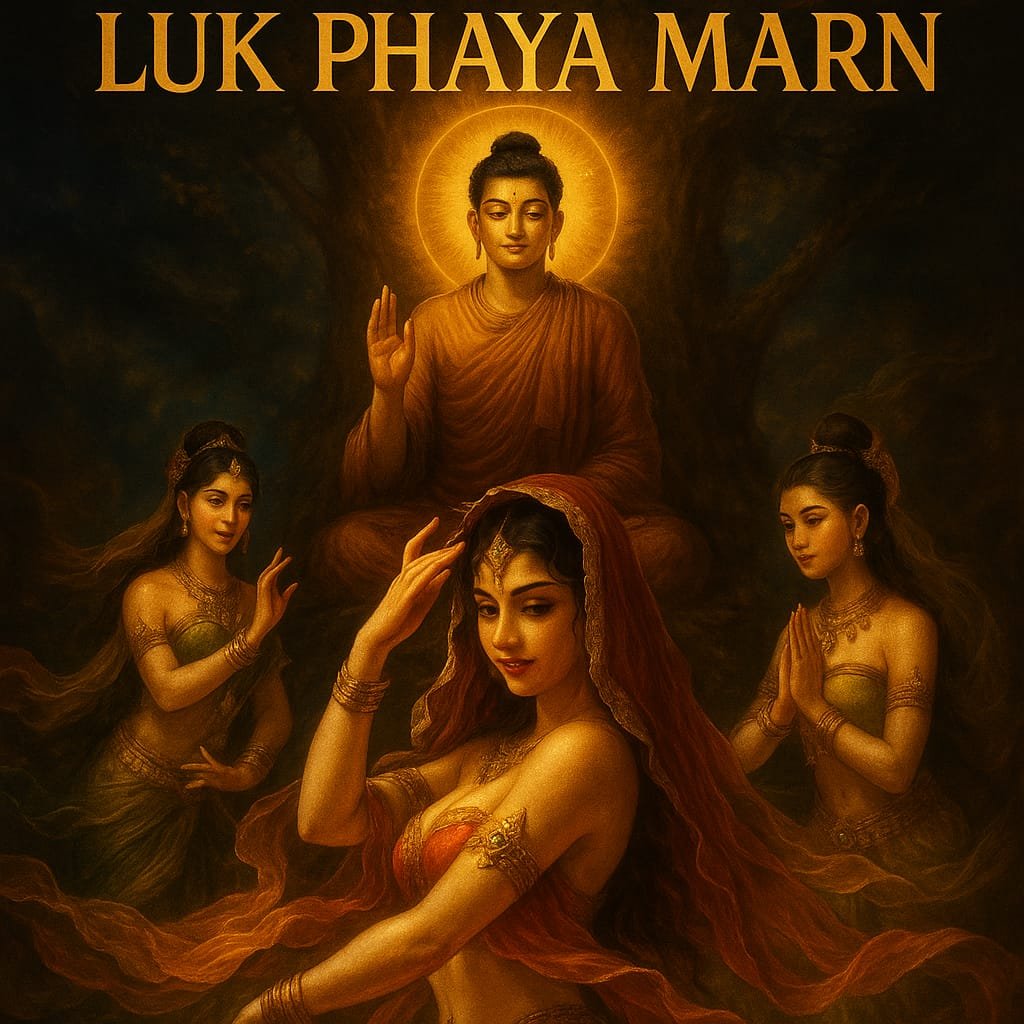
Mara: A Tempter-Being With Symbolic Power
In Buddhist cosmology, Mara is a real celestial being who rules the realm of sensual desire (กามาวจรภูมิ). Although he isn’t a devil, god, or ghost, he stands in his own category: a heavenly tempter whose role is to challenge those walking the path toward awakening.
Thai teachings describe Mara as:
- a being with consciousness, intent, and influence
- a tempter who stirs desire, fear, and confusion
- a symbol of the cravings and illusions that weaken the human mind
Because of this dual identity, Mara functions both as a powerful celestial entity and the embodiment of inner defilements (กิเลส). Moreover, many Thai masters explain that the Mara outside and the Mara inside work in similar ways — both distract, tempt, and challenge the heart.
Luk Phaya Marn: A Symbolic Wicca, Not a Being
While Mara is a celestial being, Luk Phaya Marn (ลูกพญามาร) is not:
- a ghost
- a deity
- a spirit category
- a literal child of Mara
Instead of describing an actual entity, the term refers to the seductive influence inspired by Mara’s three daughters.
Thai Buddhist texts describe these daughters as the personifications of temptation:
- ตัณหา (Taṇhā) – craving
- ราคา (Rāga) – lust
- อรดี (Aratī) – dissatisfaction with goodness
Because these figures symbolise irresistible allure, their influence forms the core foundation of Luk Phaya Marn. Consequently, Thai wicca practitioners use the term to describe a charm wicca rooted in desire, attraction, and emotional influence.
In simple terms:
Mara is a celestial tempter-being, whereas Luk Phaya Marn refers to the charm-wicca inspired by the seductive influence of Mara’s daughters.
This distinction is crucial for understanding the rest of the story.
The Buddhist Roots of Luk Phaya Marn
Thai retellings of the Buddha’s enlightenment often highlight the moment when Mara sent his three daughters to tempt the Bodhisattva. They used beauty, grace, and seductive charm to break his concentration. Nevertheless, the Buddha remained calm and completely unmoved.
Consequently, Thai teachers summarise this scene with the question:
“Are you a child of the Buddha, or a child of Mara?”
Although this statement is not literal, it asks whether a person is guided by wisdom or desire. Because of this comparison, Luk Phaya Marn eventually became a metaphor for anyone easily influenced by craving, lust, or emotional temptation.
How Luk Phaya Marn Entered Thai Wicca
Although the concept began in Buddhist lore, it gradually became part of Thai wicca as a charm-focused energy identity. Respected Thai sources mention Luk Phaya Marn in practices such as:
- Takrut Gamasut Luk Phaya Marn (ตะกรุดเงินกามสูตร ลูกพญามาร)
- Katha Maryaa Luk Phaya Marn (คาถามารยาลูกพญามาร)
- Various charm rites linked to ราคา–ตัณหา (lust and craving)
Across these references, one idea repeats consistently:
Luk Phaya Marn represents a charm-wicca rooted in the symbolic allure of Mara’s daughters — not a spirit or entity.
As a result, where Buddhist stories warn against temptation, Thai wicca transforms this narrative into a charisma-based practice.
Why Is It Considered Exceptionally Powerful
The power behind this wicca comes from the legendary influence of Mara’s daughters. Thai storytelling often describes them as so alluring that devas and humans alike could fall under their charm.
Only the Buddha resisted completely.
Because of this dramatic contrast, Luk Phaya Marn became strongly associated with:
- intense attraction
- seductive aura
- persuasive charisma
- emotional pull
- craving-driven influence
Consequently, practitioners regard this wicca as one of the strongest when it comes to charm and desire.
Why Does It Still Matters Today
Even today, Thai spiritual culture recognises how desire shapes relationships, opportunity, and human behaviour. Therefore, Luk Phaya Marn remains deeply relevant. It symbolises:
- personal magnetism
- emotional influence
- attention-grabbing confidence
- the ancient power of temptation
Although its origins reach back into Buddhist storytelling, its meaning continues to resonate strongly in modern life.
The Enduring Allure of Luk Phaya Marn
In Buddhist thought, Luk Phaya Marn symbolises temptation and mental fragility. Within Thai wicca, it becomes the essence of charm and seduction. In a cultural sense, it reflects the eternal struggle between discipline and desire.
This dual identity keeps the concept alive.
It holds story.
It holds depth.
It holds emotional power.
Ultimately, it continues to fascinate — remaining one of the most enduring charm-wicca identities in Thai spiritual culture.
🔱𝑺𝒉𝒐𝒈𝒖𝒏𝑿 𝑨𝒎𝒖𝒍𝒆𝒕𝒔
𝑾𝒉𝒆𝒓𝒆 𝒚𝒐𝒖𝒓 𝒔𝒑𝒊𝒓𝒊𝒕𝒖𝒂𝒍 𝒋𝒐𝒖𝒓𝒏𝒆𝒚 𝒃𝒆𝒈𝒊𝒏𝒔
PM/DM now or message us: https://wa.me/6580444447
#ThaiAmulet #LukPhayaMarn #ThaiWicca #BuddhistLore #ShogunXAmulets





One Response